You’ve taken guests on your boat to a waterfront restaurant and enjoyed sharing a nice relaxing dinner and a wonderful sunset. But now you realize that you’ve let time slip by and it’s getting dark. How do you safely get everyone back to your home slip? Boating at night is significantly different than daytime boating. Shoreside lights can mix with navigational lights of boats and buoys. It’s impossible to determine distances to objects.
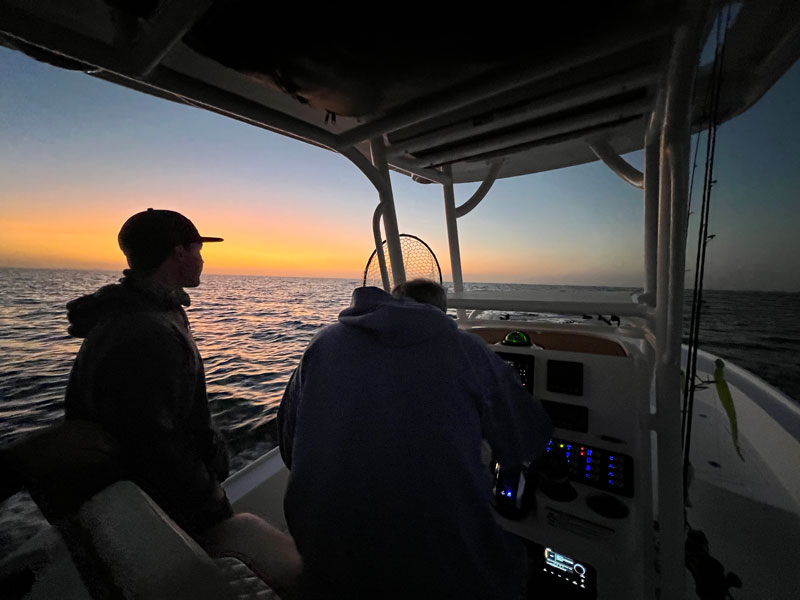
It’s best to start in well-known waters, short trips, and good weather. Explore within one or two miles of your slip and expand your range as you gain experience and confidence. You can turn the night navigation into a game with guests, asking them to look around and identify vessels and buoys. The goal is to make it safe and enjoyable.
In the days before GPS, nighttime navigation required accurate charts and the ability to correlate what the charts showed with what you could see on the water. You needed a constant awareness of your location and the ability to identify the light signatures of lighted buoys. Today, nearly everyone carries an accurate GPS in their cell phone. You still need accurate charts, which are very affordable for download onto your phone or tablet, but automatic GPS location tracking significantly reduces the navigational workload.
It is important to take a few minutes to plan a safe route from that restaurant to your home slip. The safe route should keep you away from obstacles, such as low bridges, unlit buoys, and shallow water. This way you’re able to focus on following the pre-determined route, identifying other boat traffic, and avoiding uncharted obstacles like fish traps. In some areas you’ll need to know where float-free channels exist to select a route that keeps you away from crab pot floats.
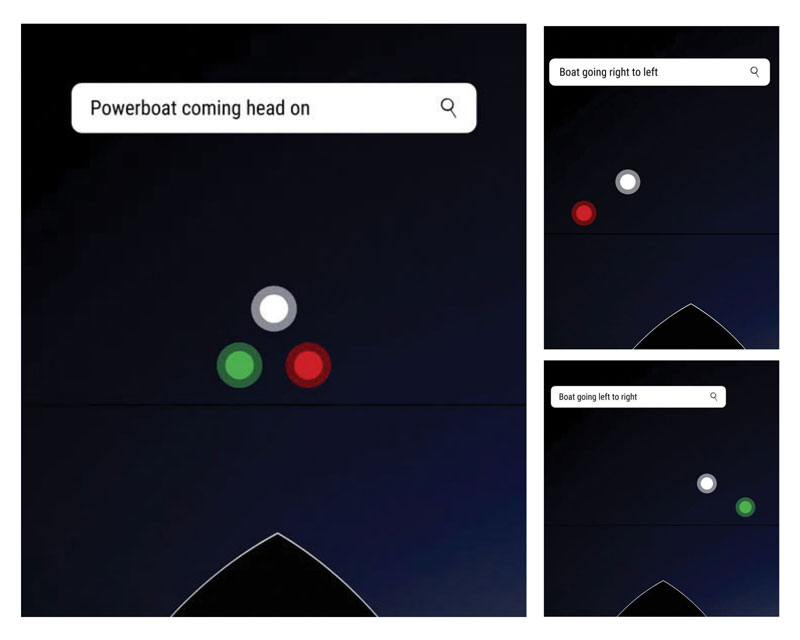
But a safe route won’t protect you from other boats. You’ll need to know the light signatures of a variety of vessel types. Small sailboats tend to be poorly lit, requiring only a red/green bow light and a white stern light that’s difficult to discern from shore-side white lights. Fast moving powerboats are easy to identify, except potentially when they are coming straight at you and only show three bow lights (red, green, and white).
Tugs tend to be easy to identify. They are well lit and exhibit two or three vertically stacked all-around (360 degree) white lights. Two lights indicate a tug that’s pushing a barge or is towing alongside; a stack of three lights indicates that it is towing a barge more than 200 meters astern. The barge should also be lit with bow and stern lights, but these are often dim, so give any tug plenty of room. I’ve seen situations where the only indication of the barge was that it obscured the shore lights beyond it.
Large cargo ships can present another identification challenge. They are lit with a red/green bow lights, a white bow light, a white masthead light (above and aft of the white bow light), and a white stern light. Cruise ships are easily identified because their deck lights stay on all the time. If you boat where dredges are common, you’ll need to know how to identify them and the safe side on which to pass. If you must pass under bridges, learn to identify the safe channel indicator lights and be extra cautious since there is less maneuvering room.
It’s a good idea to have a vessel light reference card onboard to help identify different types of vessels. And these days there are phone apps as well. I recommend reviewing the types of lights before boating at night. A powerful flashlight or spotlight is a great safety item to have at the helm, but don’t shine the light directly at another vessel, which blinds the helmsperson. Instead, shine the light on your own vessel so that it is easy for the other vessel to see you.
Don’t forget that you have a VHF radio. When in doubt, issue a call to the other vessel. This works best for large vessels that will be monitoring their radio. A flashlight may be best for signaling small vessels of your presence.
About the Author: Terry Slattery, an electrical engineer, started sailing in college; a progression of boats followed. This is one of his monthly safety articles from the Annapolis Sail & Power Squadron’s newsletter, available at aspsmd.org.