I was at a boating event recently when someone asked, “Do you know anything about when I should replace my all-chain anchor rode?” My short answer was, “Yes,” having researched the subject several years ago when I began to question the integrity of our rusty anchor chain.
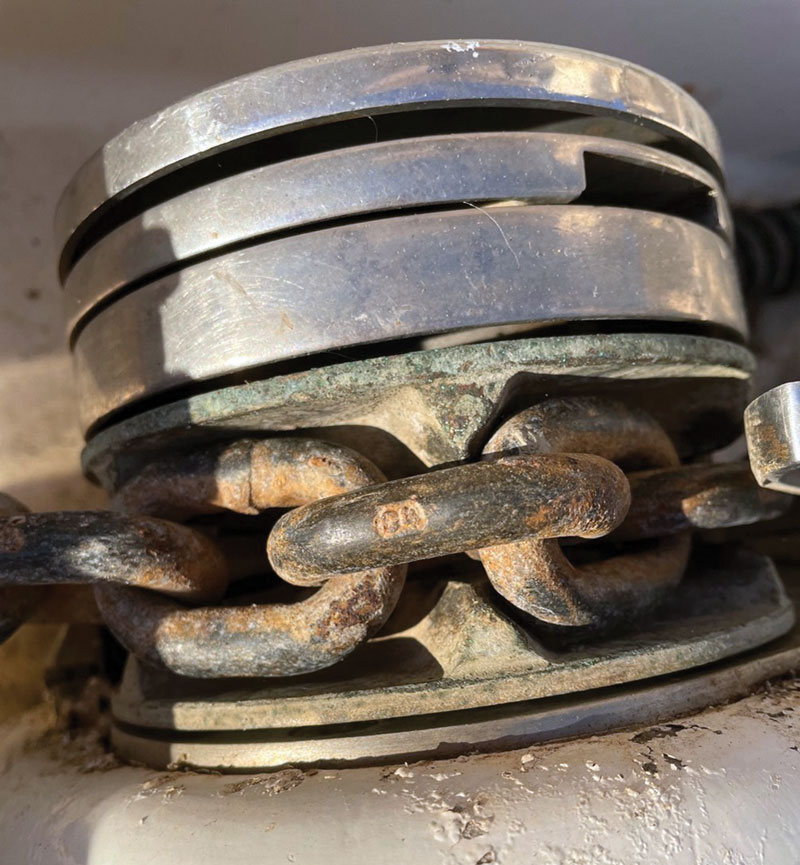
A good anchor system should be tailored to the expected anchoring environment. Boats that are expected to anchor in deep or abrasive environments like rocks or coral should use all chain rodes. However, in the soft environment of the Chesapeake Bay, an anchor plus chain plus rope rode will work.
There are multiple sizes and types of anchor chain. The links in quality chain will have a grade number stamped into the side of each link. The most common for use on boats is G4 (Grade 40), which is a high-carbon steel that is suitable for use in a windlass due to strength and durability. You should avoid the use of less expensive grades like G3 (Grade 30), which is made from low-carbon steel for lighter applications. Stainless steel chain exists but is not as strong as the high-carbon steel of G4.
Carbon steel chains are galvanized to help protect them from corrosion. Galvanizing will eventually wear away, leaving the carbon steel subject to saltwater corrosion. When that happens, you’ll start to see flakes of rusty steel deposited on deck as the chain comes aboard after anchoring. At this point, the chain’s lifetime becomes questionable. You can slow the start of corrosion by having the chain re-galvanized from time to time, but that’s an expensive step that rarely works for very long. A better approach is to replace the chain. You can also periodically swap the chain fore-end, provided that the chain is of sufficient length. Regularly washing the chain with fresh water will also extend its life.
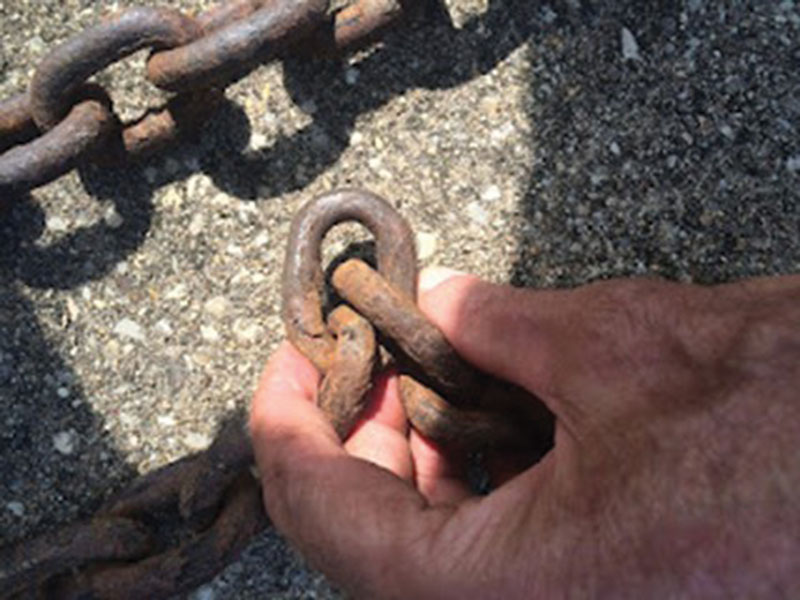
If you have decided that re-galvanizing or swapping the chain fore-end isn’t an option, at what point should the chain be replaced? I decided that 11 percent erosion was my threshold for replacing the chain. A 10 mm (3/8 inch) chain’s nominal link diameter of .394 means that the minimum link diameter should be .350 inches.
I quickly found several chain links in my anchor rode that were at my threshold for replacement. If you’re faced with a similar decision, I’d recommend a threshold of no more than 15 percent erosion. I recommend using the same rule to the shackles and to shorter lengths of chain in an anchor rode that’s used in the Chesapeake Bay.
We anchor in depths less than 30 feet of water, so we purchased 200 feet of chain and took the old chain to a metal recycling facility. We wash the new chain on a regular basis to help reduce corrosion and periodically replace the galvanized shackle that connects the anchor to the chain, which allows us to sleep soundly on anchor at night, even when it’s windy.
About the Author: Terry Slattery, an electrical engineer, began sailing while in college; a progression of boats followed. This is one of his monthly safety articles from the Annapolis Sail and Power Squadron’s “Anchor Watch” newsletter.