One of the primary responsibilities of a good skipper is the safety of the crew and vessel. There is a variety of safety equipment mandated by federal and state law and additional boating safety gear to have onboard your vessel, but I will focus on seven of the key ones.
1. Lifejackets
Lifejackets or personal flotation devices (PFDs) should be in good serviceable condition, U.S. Coast Guard (USCG)-approved, readily accessible, and of the proper size for each person onboard. While my lifejackets are generally stored below, during outings and passagemaking, the proper number of lifejackets are taken out and placed in a prominent place. Remember, you are required to have a lifejacket for every person aboard.
2. Type IV Throwable Flotation Device
In Maryland and Virginia, a type IV USCG-approved PFD (life ring or square cushion), must be onboard vessels 16 feet or longer. The type IV is most commonly used in a man overboard situation, and for that reason, it should be kept in a prominent location where it can be readily deployed. All crew should be familiar with the man overboard procedures and using the type IV.
3. Visual Distress Signals
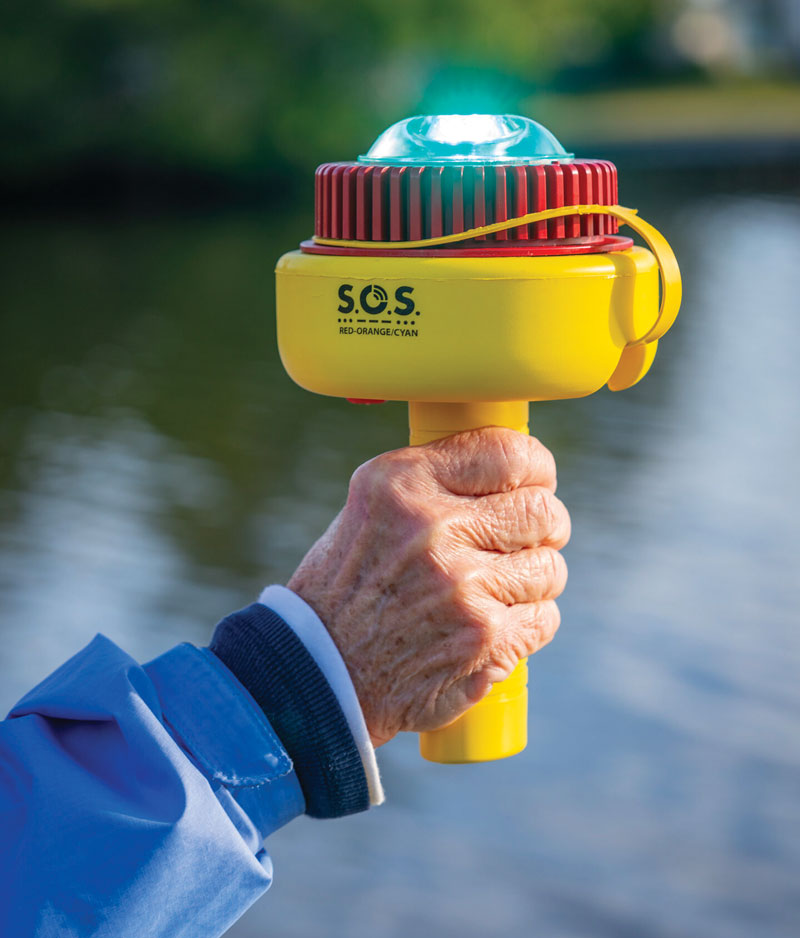
Vessels on federally controlled waters must have onboard USCG-approved visual distress signals, which usually consist of either three handheld red flares (day and night) or a visual distress light. There are other alternatives, and certain small sized vessels are exempt.
4. Fire Extinguishers
The number and size of fire extinguishers are dictated by the size of the vessel. You should inspect each extinguisher annually to make sure it is fully charged and in good operating shape. Don’t forget to mount your fire extinguisher. The USCG requires disposable marine fire extinguishers be removed from service 12 years after their date of manufacture, which is stamped on the bottom or side of the bottle.
5. Sound Producing Devices.
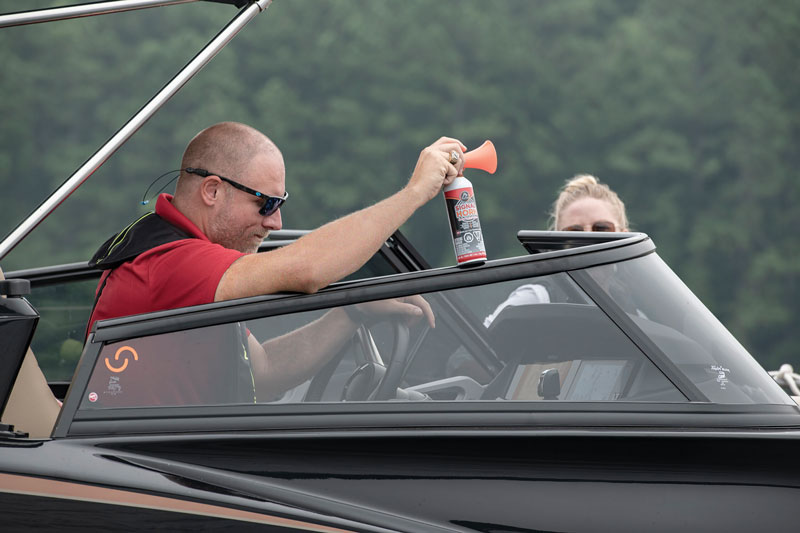
Vessels less than 65 and a half feet must have a whistle or horn. Vessels over 65 and a half feet must also have a bell that is audible for at least a mile. A good idea is to attach a whistle to each of your lifejackets. For portable air horns or mechanical horns, make sure you test them periodically.
6. First Aid Kit
When accidents occur far from shore you must be able to render first aid with the supplies you have onboard. First aid kits are a must, and you may want to add items usually not included , such as hydrogen peroxide and sea sickness medications.
7. VHF Radio
A VHF is the primary means of seeking assistance while you are on the water. Channel 16 is the hailing and distress frequency. A VHF can transmit to vessels within 10-20 miles of your location, and those vessels often are the first on scene to render assistance. VHFs radio checks should be conducted on channel 9. Find more tips in our VHF Reminders for Spring article.
Skippers should conduct a briefing before departing to familiarize crew with vessel safety procedures and equipment. Keep your safety gear in one place (e.g., ditch bag). If it is in a cabinet or locker, label the outside with a prominent marking, so it can be found quickly in an emergency.
Inspect the safety gear to ensure all is in proper working order and check expiration dates. The USCG Auxiliary offers free vessel safety checks. Find out more about them at cgaux.org/vsc. For each vessel that I skipper, I make sure all of the required safety gear, documentation, and equipment are onboard before departing. A good aid I use is the USCG Vessel Safety Check list, which can be found at this link. Stay safe!
About the Author: Captain Adam Yearwood holds a USCG 1600-ton Master’s and second mate unlimited tonnage license. He is a member of the Chesapeake Bay Professional Captains Association (CAPCA), a provider of private yacht instruction and charter services, and is an instructor for the USCG Auxiliary, Maryland safe boating course, American Boating and Sailing Association.