As we move into spring boating season, John Herlig, who teaches VHF radio etiquette at the Annapolis Boat Show’s Cruisers University, shares important reminders about marine radio use for boaters of all levels.
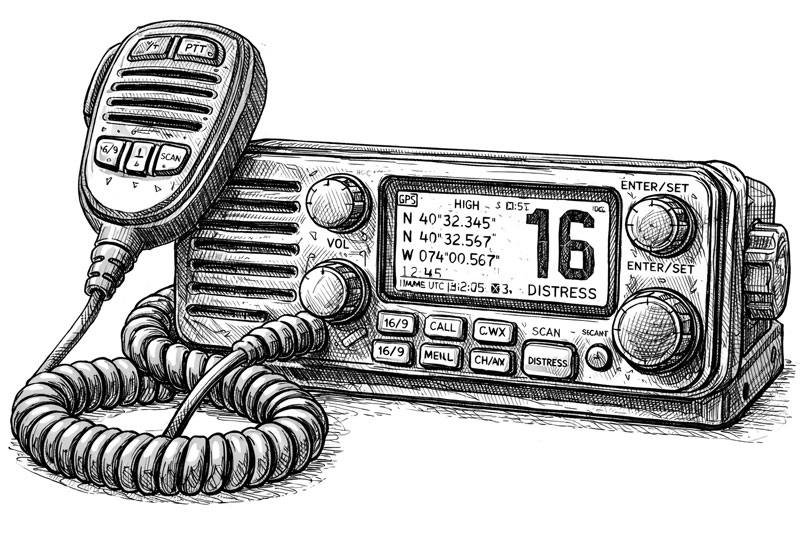
Channel Selection. Know your channels or have a channel guide available. If you hail someone on channel 16, be prepared to move your conversation to a working channel right away. That’s easier to do if you know before the call where you will move it. If that container ship or shrimp boat in front of you doesn’t answer your call on 16, odds are 13 is your next best bet, as all vessels over 65 feet are required to monitor 13 while underway. Channel 13 is also a navigation channel, where you may have an exchange with another vessel so long as it is short and strictly about navigation or overtaking.
Lingo. Strike a balance with your language, using proper terms while trying not to sound overly formal. Learn some simple radio lingo, such as affirmative for yes and negative for no. The goal is to communicate effectively with as few words as possible. Avoid CB lingo.
Radio Checks. Radio checks clog the airwaves and should be avoided unless you have legitimate cause for concern about your radio’s performance. If so, call, “Radio check, radio check,” on channel nine and await a reply. Channel nine allows hailing but is not a distress channel, so you won’t be blocking any potential emergency traffic.
Hot Mics. Open or hot mics are a danger and nuisance. Someone may be unwittingly leaning against the radio’s “Push To Talk” button or may have a radio that has been squished into a corner. The wind noise, conversations, and music from their boat will fill the airwaves for minutes on end as they cluelessly proceed along. Do not “help” by rushing to broadcast an announcement that “someone has a hot mic” (The person with the hot mic can’t hear you since they are transmitting.) Be aware of your radio to make sure you don’t accidentally transmit.
Calling Bridges and Locks. Know ahead of time the bridge’s proper name, what radio channel they monitor, and their operating schedule. Remember that “on demand” actually means “by request.” Listen a bit on the bridge channel as you approach. Are other vessels being chastised for calling too early? Too late? A little awareness will help you to understand the nuance of the bridge and its operator before it’s your turn. Hail the bridge on the proper channel the same way you would another vessel: a twice-repeated hailing, saying your vessel’s name, and waiting for a response.
Distress Calls. In an emergency in US waters, always contact the US Coast Guard on your VHF radio on channel 16. Calling the Coast Guard from a cell phone or satellite phone should be your second choice, although if you have a cell signal, it is a good idea to have your cell phone handy. The Coast Guard may direct you to call a specific number from your phone.
Mayday. The highest level of emergency onboard a vessel, a Mayday call implies imminent risk of sinking, unrecoverable man overboard, or life-threatening injury. A reference card with step-by-step instructions is a great idea, even if you are an experienced boater. Adrenaline can dislodge what you thought you had well-memorized.
You will call out “Mayday, mayday, mayday,” and proceed to offer all pertinent information, including your vessel name, the type of emergency, a vessel description, precise location using GPS coordinates, and information about the number of people onboard the vessel or in the water. Practice these calls before you need to make one.
Most modern non-handheld VHF radios have an automated distress capability. For this to work, your radio must have DSC capability, an embedded or external-connected GPS, and a registered MMSI number. The time to check these features is now, before the summer season is upon us.
Turn it on. A VHF radio that is off works about as well as a spare tire left behind in the garage. Brush up on your basics and have a radio on and at your side when you head out.
By John Herlig
Find John Herlig’s “Handy VHF Reference” and the online course “VHF Radios: Everything You Need To Know,” at theboatgalley.com’s store.