Bowriders are a blast, dual consoles are delightful, expresses are entertaining, and center consoles are crazy-cool. But, which type of powerboat will be best for you, personally? This is a call that you and you alone can make. But from one nautical nut to another, we can certainly help steer this ship in the right direction.
Inquiring Minds
The key to choosing the right type of boat mostly boils down to asking yourself the right questions. Many of us are initially attracted to a boat by a single attribute, like its sporty looks, a comfortable cabin, or fishing utility. But there are so many different factors ultimately coming into play that if you fail to think deeper about why you want a boat in the first place, you could end up in a love-hate relationship with it. Before becoming infatuated with this hull or that one, be sure to consider:
What activity do you hope to do on the boat most often, just sometimes, and on rare occasions?
As a general rule of thumb, the more specialized a boat is the better it will be for one specific activity, but the less versatile it will be. On the flip side of the coin, while general-purpose boats can be good for many various activities, they usually aren’t particularly great for any one of them. Comparing a wake surfing boat versus a dual console provides a great illustration of the potential trade-offs. The wake surfing boat is a dedicated watersports machine and will out-shine the dual console every time someone grabs a board and jumps off the swim platform. But if you also hope to try fishing once in a while, cruise down the Bay to distant ports, or drop a few snap-traps over the side and catch some crabs, that wake surfing boat is ill-equipped to say the least. The dual console, meanwhile, will perform fairly well for all of these activities, tow sports included, even though it might not be “best” at any one of them. So, ask yourself what you hope to do and how often, to get a better picture of the importance of specialization versus flexibility.
Whom will I go boating with?
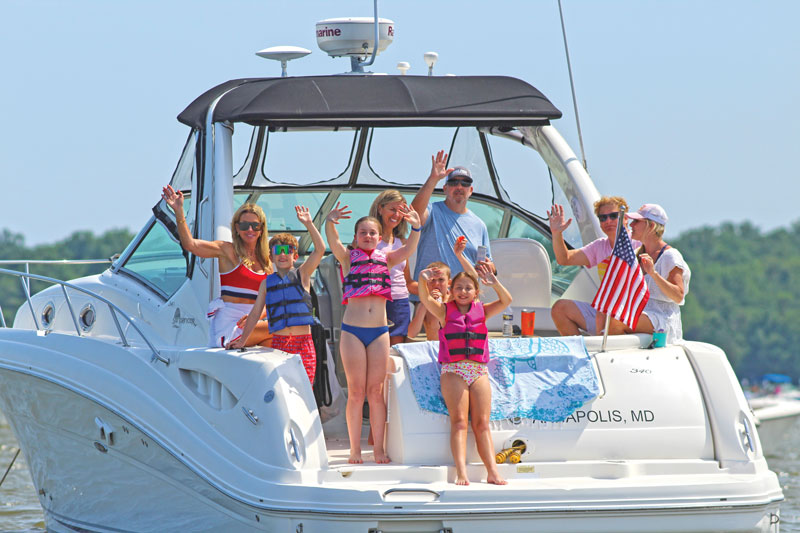
A big part of this question relates to whether you have kids, or if you’ll be boating with adults most of the time. Whenever kids will be onboard on a regular basis, perks such as a cabin with a berth and/or an enclosed head compartment can become critical features. That doesn’t necessarily mean getting a cruiser or a pilothouse boat is a must, because in this day and age many builders have come up with ways to engineer a head compartment into a center console or add a small cabin to a bowrider. But it will certainly help to steer the decision as you consider different classes and sizes of boats. Bonus Tip: Whenever kids will be in the mix, make sure you choose a boat that offers some sun protection. Otherwise, even relatively short trips can become problematic, fast.
How many people will I go boating with?
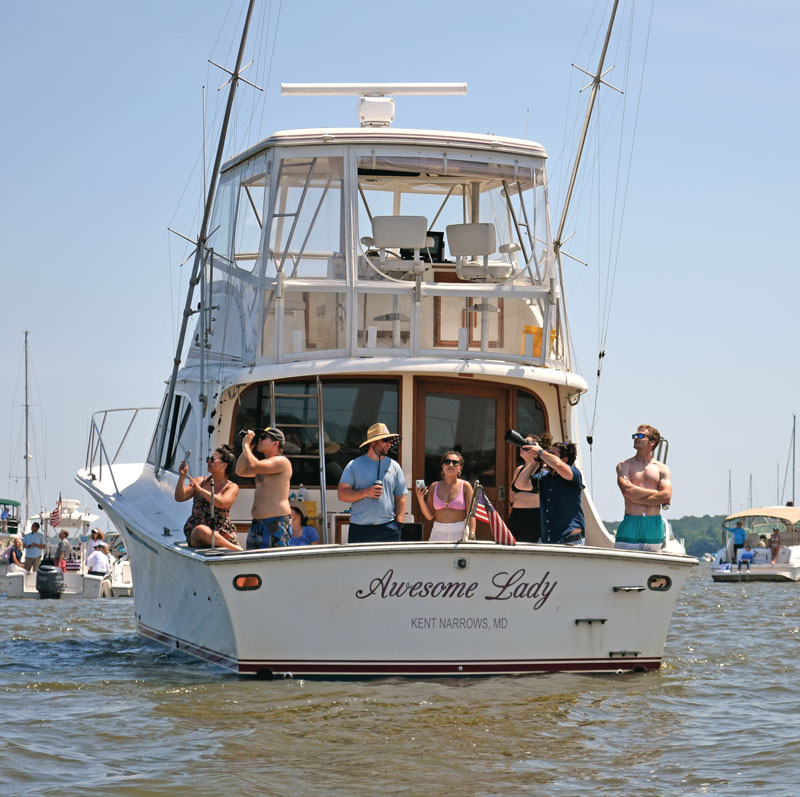
This will have an impact on how big a boat you want, of course, but also on whether you’d opt for a layout that maximizes seating capacity versus deck space. A pontoon boat, for example, might have seating for a dozen people or more. But a similarly sized center console will probably have seating for more like four to eight people.
How likely are you to venture into rough waters?
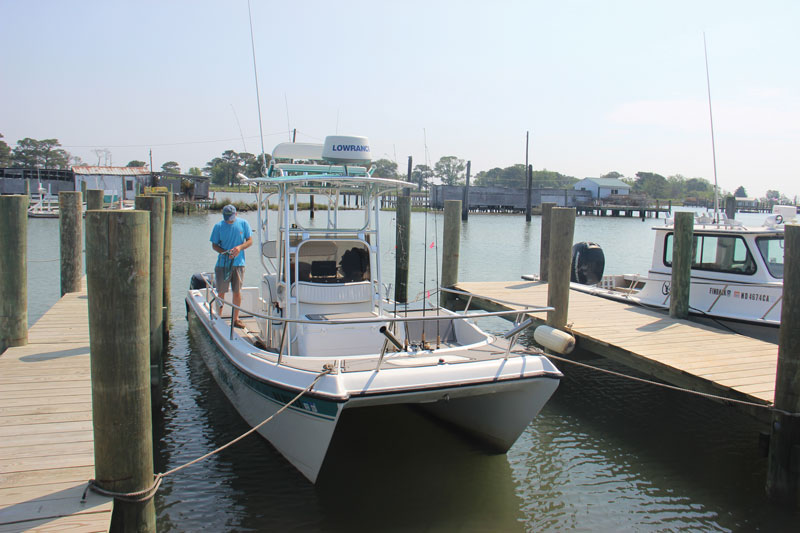
Everyone wishes it was glass-calm all the time, but it’s not. Setting aside a boat’s size for the moment, remember that powercats and boats with deep-V hulls will ride the smoothest in a chop. However, boats with semi-V hulls or flatter bottoms will offer the most stability. Remember that a boat’s construction, weight, and speed will factor into the comfort level of the ride, too.
Where do you plan to store your boat?
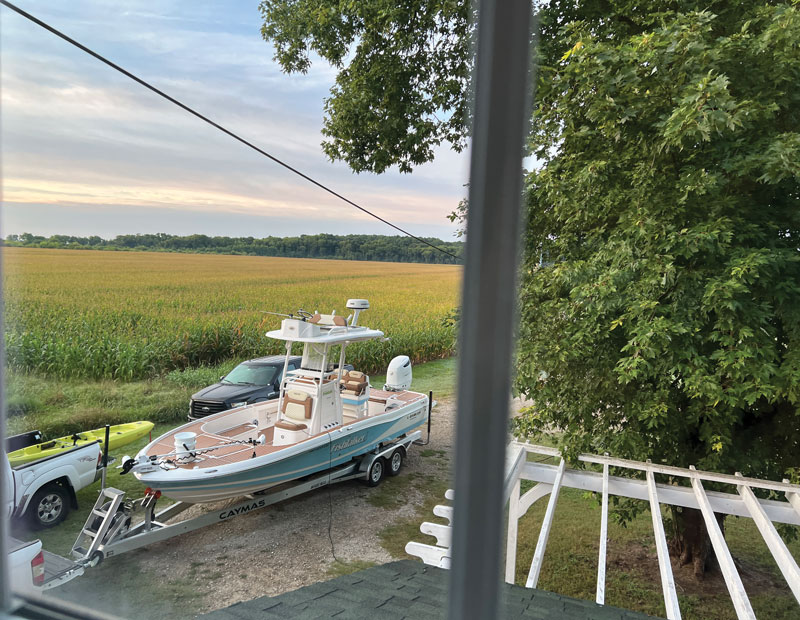
This may seem like an odd question to ask at this point, but the cost difference between keeping your boat on a trailer in your driveway and at a marina can be substantial. If you do plan on storing the boat at home, some boat types, such as express cruisers and trawlers, become an unlikely choice. But for most other boat types you’ll have plenty of options even though the size range will be capped.
Do you plan to go weekending or overnighting?
If so, a cabin will be a must-have for most people. That goes for folks who enjoy camping, too, because while it’s possible to sleep on the open deck of a boat, it’s not very fun; you’ll be exposed to bugs and the whims of Mother Nature, fiberglass is hard as a rock, and you generally wake up covered in dew.
Different Boats for Different Folks
Which of these boat types is “best”? That’s your call.
Bowriders:
High Points – Extremely versatile and good for all-around fun on the water. Gobs of seating. Wide range of sizes and expense levels to choose from.
Low Points – Not exceptionally great for any one specific activity.
Center Consoles:
High Points – The best fishing machines around, bar none.
Low Points – Just so-so for most other activities. Plus, who wants to sit on fish shmaltz when cocktail hour arrives?
Deck Boats:
High Points – Same as bowriders, but with larger bow cockpits.
Low Points – That wider bow can pound in waves on some models.
Dual Consoles:
High Points – Most of the advantages of a bowrider, but with some fishing abilities in the mix and better protection for the family than a center console can offer.
Low Points – Not quite as fishable as a center console and slightly less seating than a bowrider.
Express Cruisers:
High Points – Weekending and cruising capabilities. Gobs of comfort. Some are quite sporty.
Low Points – Tend to be big and expensive. Lots of complex systems means there’s lots to go wrong; expect maintenance chores to grow.
Pilothouses and Walkarounds:
High Points – Decent fishability with protection at the helm. Basic overnighting capability.
Low Points – What? You gave up some fishability just because you were a little chilly on a center console running through the snow at 40 mph last December?!
Pontoons:
High Points – Endless seating and relaxation. Great stability at anchor.
Low Points – Not awesome in big seas. Most aren’t sporty (though some tri-toons will surprise you).
Powercats:
High Points –Smoothest possible ride in rough conditions. More deck space than boats that come to a point at the bow.
Low Points – Some have unusual handling characteristics. They look kinda funny (believe it or not, in surveys that is the number one complaint).
Skiffs and Jon Boats:
High Points – Super simple, super affordable, minimal maintenance.
Low Points – Zero frills; your head compartment is a bucket.
Trawlers:
High Points – Great livability. Better efficiency than most cruisers.
Low Points – S-L-O-W
Watersports Boats:
High Points – Very specialized and ideal for the sport each model targets.
Low Points – Not very good for any purpose other than the targeted watersport.
Yachts:
High Points – The ultimate in luxury. You get to rub elbows with the likes of Jeff Bezon, Mark Zuckerberg, and Elon Musk.
Low Points – You have to rub elbows with the likes of Jeff Bezos, Mark Zuckerberg, and Elon Musk.
Scoring for the Win
Okay: you’ve thought about these different questions and how you’d answer them, so now rank them by importance. Give each different style of boat a score for each question, and see which comes out on top. Then start looking at individual models and get a feel for how well they might serve you and your family. Soon, you’ll be able to settle on the best boat for you, be it a bowrider, a center console, or cruiser. Or… maybe one of each?
By Lenny Rudow