As discussed in our previous article, Teak Care Part 1, there are numerous ways to treat marine teak. Options range from doing literally nothing and allowing the wood to naturally weather, to investing significant time or dollars to produce a finish worthy of Wooden Boat Magazine. The effort required depends on where you wish to land on the spectrum of teak care.
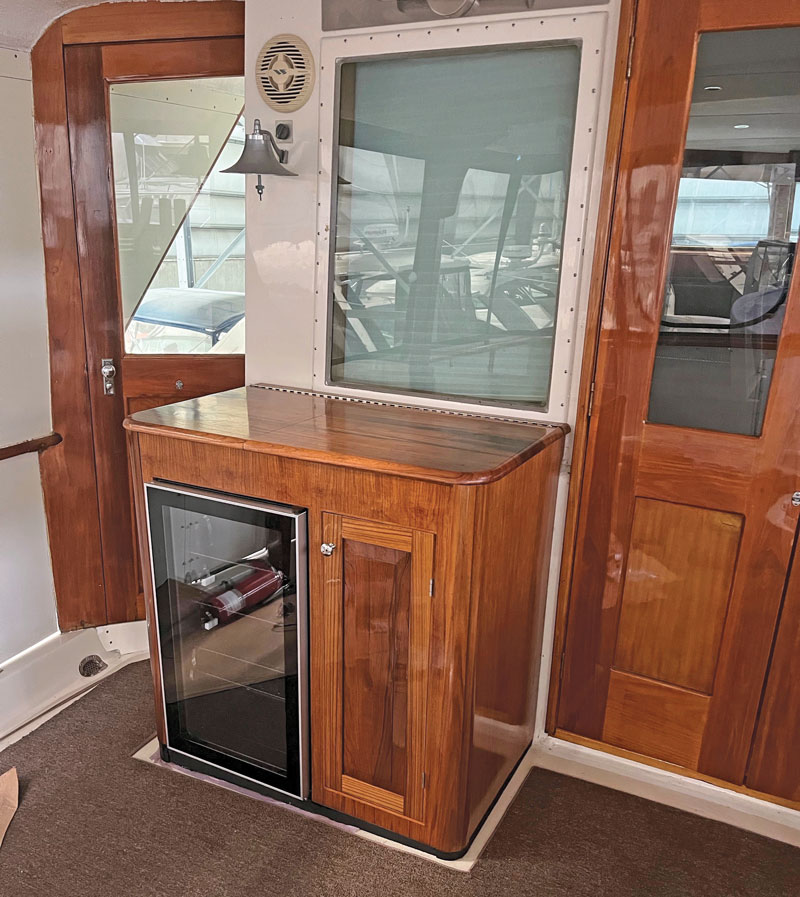
Consider these four critical decision points before choosing an approach:
- Cost: This is directly tied to labor. Materials for coating or sealing teak are minimal compared to the cost of professional labor or your own time.
- Visual Requirements: Different aesthetics require vastly different levels of effort to achieve and maintain.
- Longevity: Every treatment requires periodic maintenance. Reapplication frequency depends entirely on the product you choose.
- Complexity: Advanced products often require specialized technicians to apply correctly, driving up expenses.
The overview below outlines the spectrum of application effort and the unique visual impacts associated with various products. While not exhaustive, this guide provides the essential ‘lay of the land’ for boat owners.
The Teak Care Spectrum
1. Greyed Teak (Bare Wood)
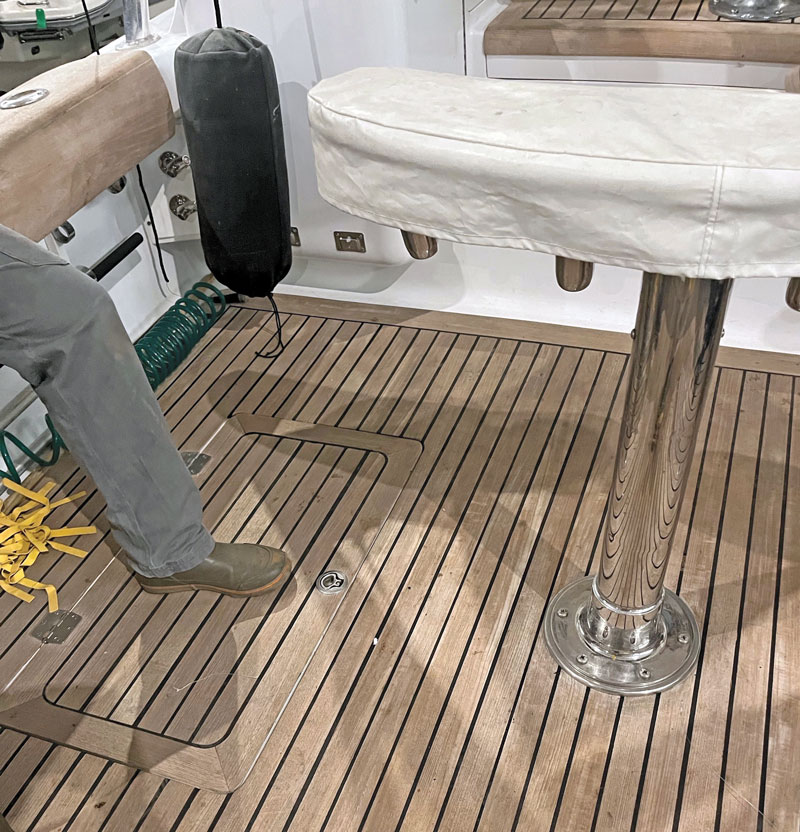
Visual Impact: Natural silver-grey.
Application and Maintenance: This is the easiest approach to manage. Owners can go through their entire boat ownership history without doing anything more than basic cleaning. However, bacteria, atmospheric particulates, and detritus can develop within the grain, causing a dirty discoloration.
Critical Technique: Discoloration can be remedied with an annual cleaning using a soft-bristle brush and a mild agent, such as Teak Decking Systems granular cleaner. Always use the mildest cleaner possible. Harsh, off-the-shelf acid cleaners work fast, but they strip the soft tissue out of the wood, raising the grain. After a few years, the remaining hardwood grain must be sanded down, permanently thinning the deck. Many relatively new boats suffer from ruined teak decks due to excessively heavy cleaning.
Best Practice: It is imperative to use a soft brush and scrub only across the grain. This prevents the soft tissue from being gouged out and preserves the thickness of the material. To slow dirt penetration without changing the wood’s color, apply a water-based polymer sealer like Teak Decking Systems Sealer and Preserver.
2. Semco Teak Sealer
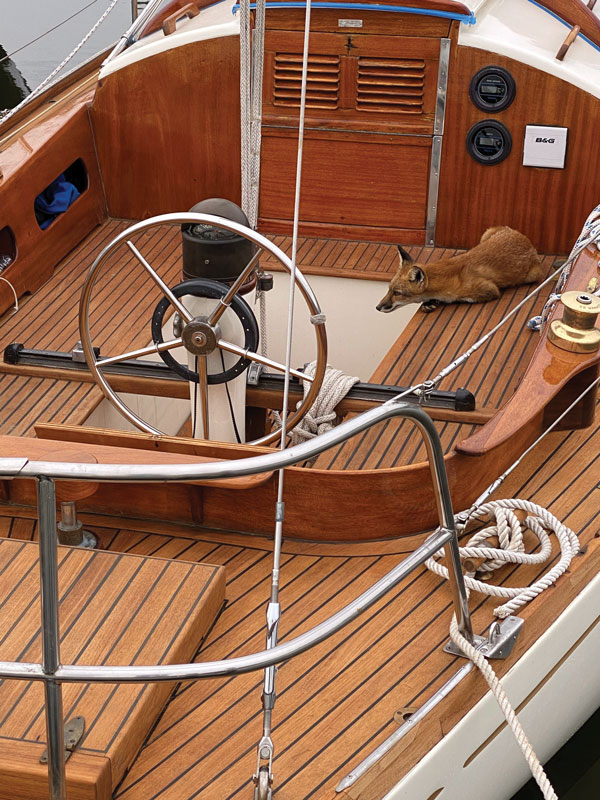
Visual Impact: A clean, fresh, natural teak appearance. (Note: Some available pigmented colors can look unnatural.)
Application and Maintenance: Semco has a water-like consistency and is applied over freshly cleaned, dry teak. This petroleum-based product lasts roughly two months in mid-Atlantic weather before requiring reapplication. Reapplication is simple: perform a light, quick cleaning, allow the wood to dry, and wipe on a fresh coat with a rag.
Pro Tip: An entire 35-foot teak deck can be coated in a couple of hours. Keep a dry rag handy to instantly wipe off any spills on adjacent surfaces. While taping is generally unnecessary, Semco can stain heavily oxidized fiberglass; test a small area first and use caution near the edges if your gelcoat is chalky.
3. Starbrite Teak Sealer
Visual Impact: Heavily pigmented, matte finish.
Application and Maintenance: This product is much thicker than Semco. Because of the heavy pigment content, it builds up after a few applications and will eventually create an artificial, “painted” look unless stripped periodically. It is a resilient coating that typically needs to be applied once a year. However, it is difficult to remove, requiring a chemical stripper, heavy scrubbing, and a wood brightener.
4. Cetol Teak Sealer
Visual Impact: A shiny, deep, “almost-varnish” appearance. It can be paired with a high-gloss overcoat if a mirror finish is desired.
Application and Maintenance: Cetol requires substantial work and demands the same preparation as traditional varnish. Strip the wood down to bare timber using a heat gun (taking care not to burn the wood) or a chemical stripper.
Best Practice: Always test chemical strippers on adjacent areas first to ensure they will not damage nearby finishes, and tape off surrounding areas meticulously.
The Benefit: Once down to bare wood, sand and fair the surface smoothly; a shiny gloss finish will telegraph every minor bump or depression left in the wood. The primary advantage of Cetol is that it requires no sanding between coats, which drastically cuts down labor time once the initial prep is complete. It requires a maintenance recoat every year, making it an excellent DIY product for brightwork.
5. Traditional Varnish
Visual Impact: The quintessential, deep-amber Wooden Boat Magazine look.
Application and Maintenance: Prep the wood identically to the process outlined for Cetol. For those unfamiliar with varnish application, Rebecca Wittman’s book, “The Brightwork Companion,” is an excellent tutorial on prep and technique. Traditional clear coatings are labor-intensive. They require detailed, meticulous sanding between every single coat, and many layers must be built up to achieve a deep look that offers proper UV protection.
Best Practices: Expect to apply at least two maintenance coats every year unless the brightwork is kept under canvas. Canvas covers will save significant time and money long-term. Dings can be repaired by scraping out failed sections, building up fresh layers to match the existing thickness, and then applying an overall topcoat. Success requires patience and learned technique.
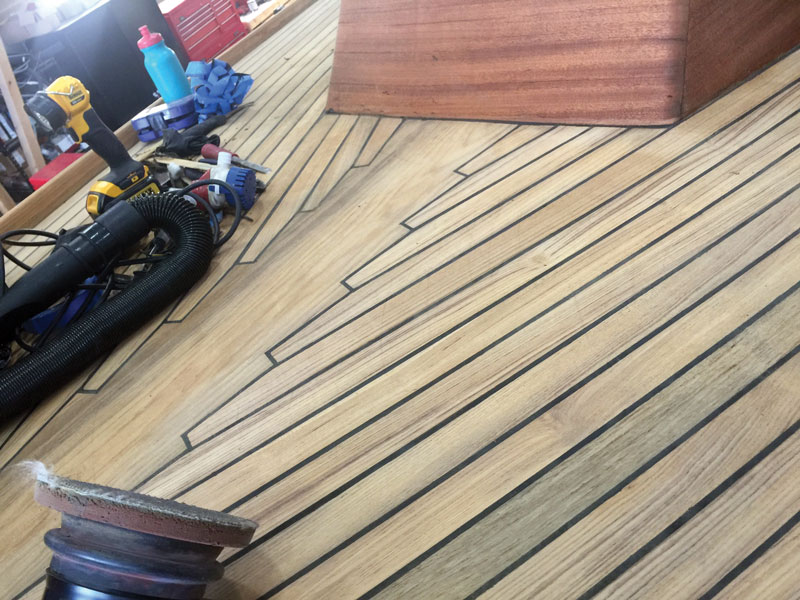
6. Two-Part Coatings
Visual Impact: Visually similar to traditional high-gloss varnish. Common products include Awlgrip Clear, Epifanes 2-part, and Bristol Clear Urethane.
Application and Maintenance: These systems require the same rigorous surface preparation as traditional varnish. While these finishes last significantly longer, they demand a much higher level of technical expertise to apply smoothly. Furthermore, some of these products carry highly carcinogenic properties when sanded or applied. Consequently, wearing a proper chemical respirator mask and robust personal protective equipment (PPE) is mandatory during application.
About the Author: Rick Truett is a 35-plus year veteran of the marine industry. He maintains ABYC Master Certified Technician status among other certifications. Rick runs Truett Marine Services, a full service mobile marine company operating in the Baltimore/Annapolis area and is the lead vessel systems instructor for Annapolis School of Seamanship and can be reached at [email protected].