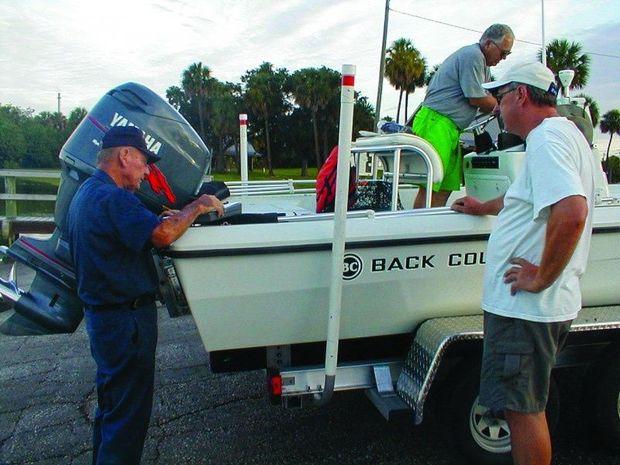
 If you are the master of your domain, then that extends to your boat. And she sure is pretty. You’re militant with organization and maintenance upkeep. You have a folder detailing every bit of work that’s been done on the old girl since 1983. She’s in great shape.
But then, on an otherwise pleasant afternoon, the Coast Guard boards your vessel and finds some red flags. How did you miss these?
It happens more often than you’d think, unfortunately. We’re here to save you some time and make you look better when it does happen. Vessel safety checks are free and take only 15-45 minutes, depending on the size of your vessel. And they’re helpful. “Most people who call and ask for an exam are usually pretty prepared, and know what they need to have,” says Wendy Norwitz, who performs the safety checks for Flotilla 23-1 in Annapolis. “The people who get boarded are usually pretty nervous.” Prepare yourself early and take this opportunity to make your boat shipshape, literally.
Norwitz stresses the following:
Lifejackets. Whenever you go out, make sure you have the correct number onboard. However, also take a look at your passengers. If you have several beefy guys going out fishing with you, it’s going to do no help to have six youth lifejackets still sitting in their shrink wrap down below, despite whatever discount you got on them. And if you spend the money to get inflatable life jackets, remember that they have to be worn to count. They don’t work unless you’re wearing them when you go overboard.
Flares. Sure, you have them onboard in case you need them. But you’ve never needed them, have you? So is it possible that the first George Bush was in office when your flares expired? Check them out and update them ASAP if necessary. Outdated flares are the most frequently cited issue in vessel safety checks.
Fire extinguishers. Same thing here. It’s great that you have one, but is it going to work when you are actually putting out a fire? Double check and make sure: it could save your life. You need at least one Type B-1 USCG-approved extinguisher.
Other key points are backfire flame control, ventilation, and navigation lights. If you’ve completed a boating safety class and have a card saying so, keep that on board in a safe place, as well.
When you complete your safety check, you’ll be given a sticker decal to keep on your boat. Don’t throw this away. “Active duty Coast Guardsmen do look for the sticker,” Norwitz says. “Usually if you have the sticker, you have a better chance of not getting boarded.”
Getting a vessel safety check each year is a free, easy way to help minimize the probability of letting a safety-related problem go unnoticed. But safety inspectors also view themselves as educators, and are happy and willing to discuss opportunities for you to make your boat a safer environment for you and your passengers. It will also give you a great heads up on federal and state safety requirements, should you ever be boarded.
Take a virtual vessel safety check and schedule an in-person check at uscgaux.info.
If you are the master of your domain, then that extends to your boat. And she sure is pretty. You’re militant with organization and maintenance upkeep. You have a folder detailing every bit of work that’s been done on the old girl since 1983. She’s in great shape.
But then, on an otherwise pleasant afternoon, the Coast Guard boards your vessel and finds some red flags. How did you miss these?
It happens more often than you’d think, unfortunately. We’re here to save you some time and make you look better when it does happen. Vessel safety checks are free and take only 15-45 minutes, depending on the size of your vessel. And they’re helpful. “Most people who call and ask for an exam are usually pretty prepared, and know what they need to have,” says Wendy Norwitz, who performs the safety checks for Flotilla 23-1 in Annapolis. “The people who get boarded are usually pretty nervous.” Prepare yourself early and take this opportunity to make your boat shipshape, literally.
Norwitz stresses the following:
Lifejackets. Whenever you go out, make sure you have the correct number onboard. However, also take a look at your passengers. If you have several beefy guys going out fishing with you, it’s going to do no help to have six youth lifejackets still sitting in their shrink wrap down below, despite whatever discount you got on them. And if you spend the money to get inflatable life jackets, remember that they have to be worn to count. They don’t work unless you’re wearing them when you go overboard.
Flares. Sure, you have them onboard in case you need them. But you’ve never needed them, have you? So is it possible that the first George Bush was in office when your flares expired? Check them out and update them ASAP if necessary. Outdated flares are the most frequently cited issue in vessel safety checks.
Fire extinguishers. Same thing here. It’s great that you have one, but is it going to work when you are actually putting out a fire? Double check and make sure: it could save your life. You need at least one Type B-1 USCG-approved extinguisher.
Other key points are backfire flame control, ventilation, and navigation lights. If you’ve completed a boating safety class and have a card saying so, keep that on board in a safe place, as well.
When you complete your safety check, you’ll be given a sticker decal to keep on your boat. Don’t throw this away. “Active duty Coast Guardsmen do look for the sticker,” Norwitz says. “Usually if you have the sticker, you have a better chance of not getting boarded.”
Getting a vessel safety check each year is a free, easy way to help minimize the probability of letting a safety-related problem go unnoticed. But safety inspectors also view themselves as educators, and are happy and willing to discuss opportunities for you to make your boat a safer environment for you and your passengers. It will also give you a great heads up on federal and state safety requirements, should you ever be boarded.
Take a virtual vessel safety check and schedule an in-person check at uscgaux.info.
Thursday, May 19, 2016 - 08:45
If you are the master of your domain, then that extends to your boat. And she sure is pretty. You’re militant with organization and maintenance upkeep. You have a folder detailing every bit of work that’s been done on the old girl since 1983. She’s in great shape.
But then, on an otherwise pleasant afternoon, the Coast Guard boards your vessel and finds some red flags. How did you miss these?
It happens more often than you’d think, unfortunately. We’re here to save you some time and make you look better when it does happen. Vessel safety checks are free and take only 15-45 minutes, depending on the size of your vessel. And they’re helpful. “Most people who call and ask for an exam are usually pretty prepared, and know what they need to have,” says Wendy Norwitz, who performs the safety checks for Flotilla 23-1 in Annapolis. “The people who get boarded are usually pretty nervous.” Prepare yourself early and take this opportunity to make your boat shipshape, literally.
Norwitz stresses the following:
Lifejackets. Whenever you go out, make sure you have the correct number onboard. However, also take a look at your passengers. If you have several beefy guys going out fishing with you, it’s going to do no help to have six youth lifejackets still sitting in their shrink wrap down below, despite whatever discount you got on them. And if you spend the money to get inflatable life jackets, remember that they have to be worn to count. They don’t work unless you’re wearing them when you go overboard.
Flares. Sure, you have them onboard in case you need them. But you’ve never needed them, have you? So is it possible that the first George Bush was in office when your flares expired? Check them out and update them ASAP if necessary. Outdated flares are the most frequently cited issue in vessel safety checks.
Fire extinguishers. Same thing here. It’s great that you have one, but is it going to work when you are actually putting out a fire? Double check and make sure: it could save your life. You need at least one Type B-1 USCG-approved extinguisher.
Other key points are backfire flame control, ventilation, and navigation lights. If you’ve completed a boating safety class and have a card saying so, keep that on board in a safe place, as well.
When you complete your safety check, you’ll be given a sticker decal to keep on your boat. Don’t throw this away. “Active duty Coast Guardsmen do look for the sticker,” Norwitz says. “Usually if you have the sticker, you have a better chance of not getting boarded.”
Getting a vessel safety check each year is a free, easy way to help minimize the probability of letting a safety-related problem go unnoticed. But safety inspectors also view themselves as educators, and are happy and willing to discuss opportunities for you to make your boat a safer environment for you and your passengers. It will also give you a great heads up on federal and state safety requirements, should you ever be boarded.
Take a virtual vessel safety check and schedule an in-person check at uscgaux.info.