After an unseasonally cold and late spring, the summer boating season is in full swing. Even sky-high fuel prices have not seemed to slow down area boaters. Most boatshops are humming along with lots of work and lots of hiring signs out front.
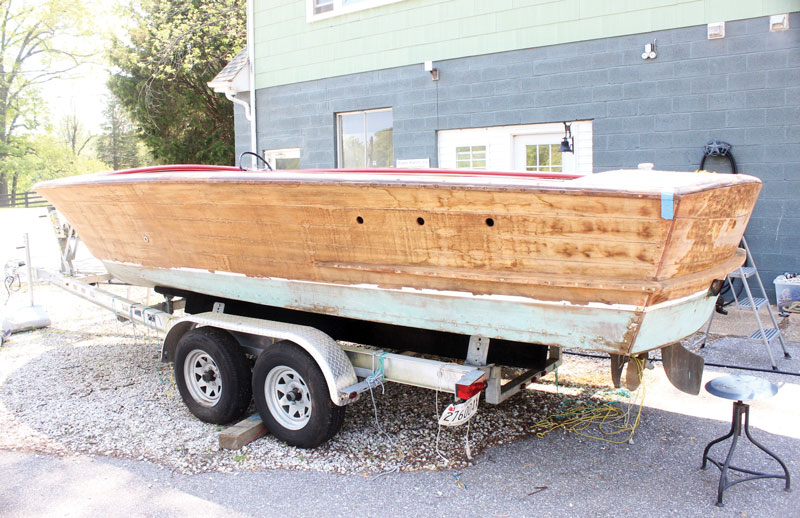
Spring boat shows report strong attendance and lots of interest. What the long-term effects of high fuel prices will be remains to be seen, but the boating industry has weathered and met such challenges in the past. At the risk of being repetitive, the mood is still “cautiously optimistic.” Jeff Abell of Abell Marine and Casa Rio Marina put it best in last month’s report, “… People aren’t going to sell their boats; they just won’t use them as much. We’ve been through more than a few ups and downs in the boat business but we’re still here.” Well said, Jeff.
Billy Zero from Maritime Fabrication in Gambrills, MD, explains how to prevent a common and annoying problem—plastic lenses in hatches and control stations that get crazed and foggy.
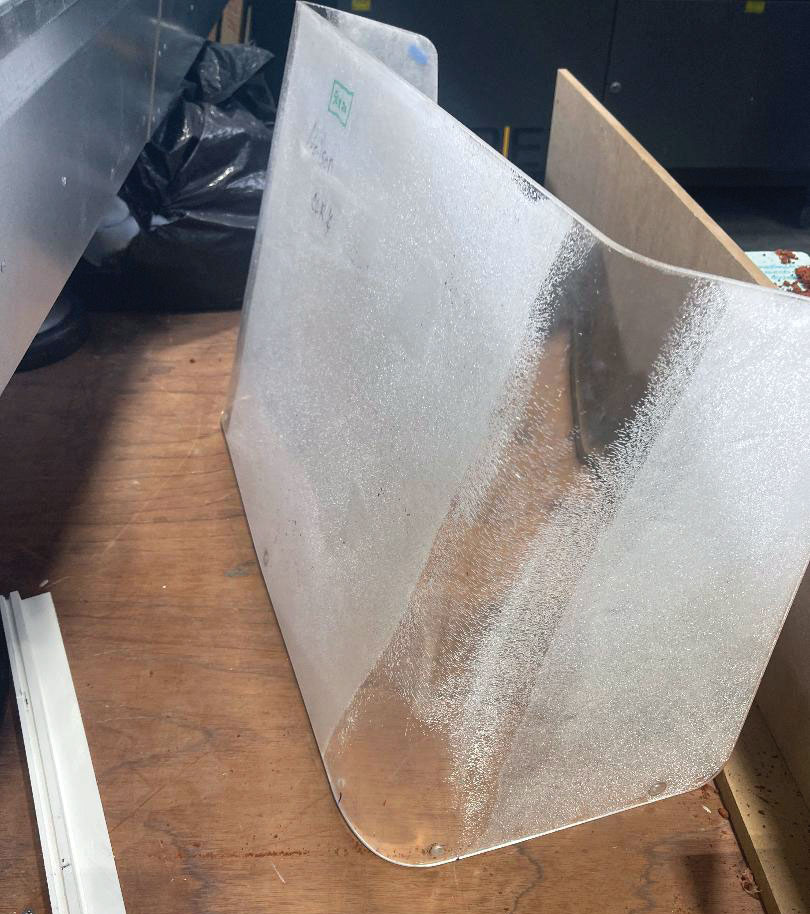
“That lens (in the photo) was torched with a flame torch and bent in place in 20 minutes. When you do this, the part where the bend is, is heated up quickly, while the rest of the lens is left at room temperature. The part that is heated up is next to a part of the plastic that is not heated up, so that plastic is not annealed correctly. This causes stress within the plastic, and the plastic will breakdown and craze within a few years. When this happens, the spot that was heated meets the spots that were not heated and the plastic breaks down at that specific intersection. The cracks start generally within a year or two. We anneal our plastic in our ovens and remove moisture from the entire sheet and heat the plastic slowly and thoroughly. This makes our products last much longer. They are stronger as they are annealed correctly,” he stated.
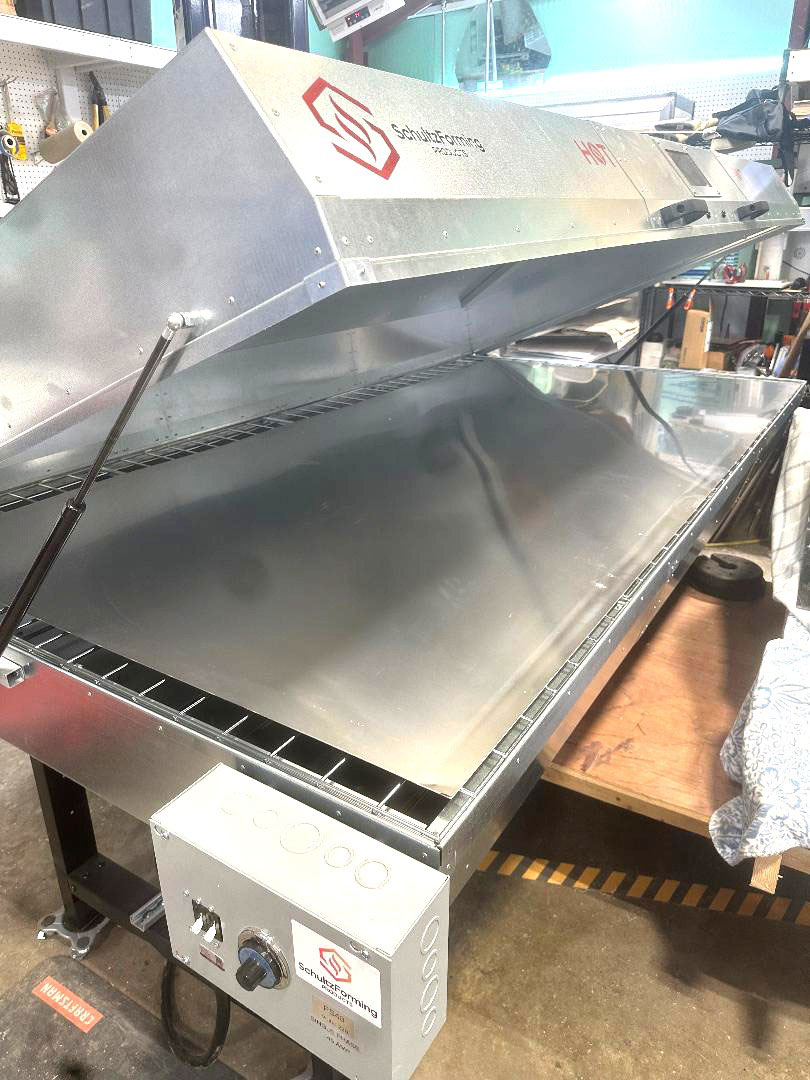
“Maritime Fabrication is one of the leaders on the East Coast for thermoforming and templating. We’ve added over $20,000 in new equipment, including our new thermoforming oven, in March. We still have the old one, and we have a custom portable oven that we built that can handle up to 12-foot sheets. And we can handle the largest thermoforming and plastic jobs on the East Coast. We regularly get lenses like the one in the photo and have to re-create the lens the proper way. It’s a process and it’s time consuming to do correctly. If you want products that last, you call Maritime Fabrication,” he concluded.
Erin Green from Apex Marine in Tracys Landing, MD, checks in with this update.
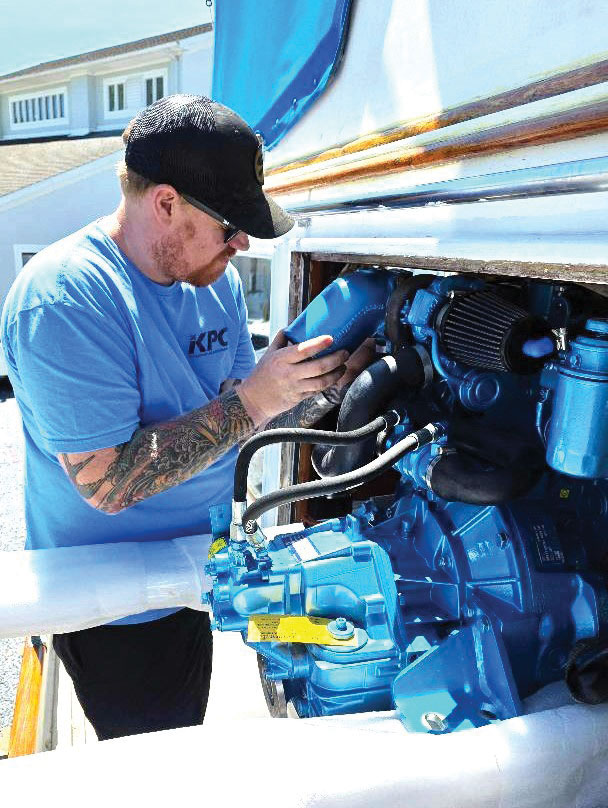
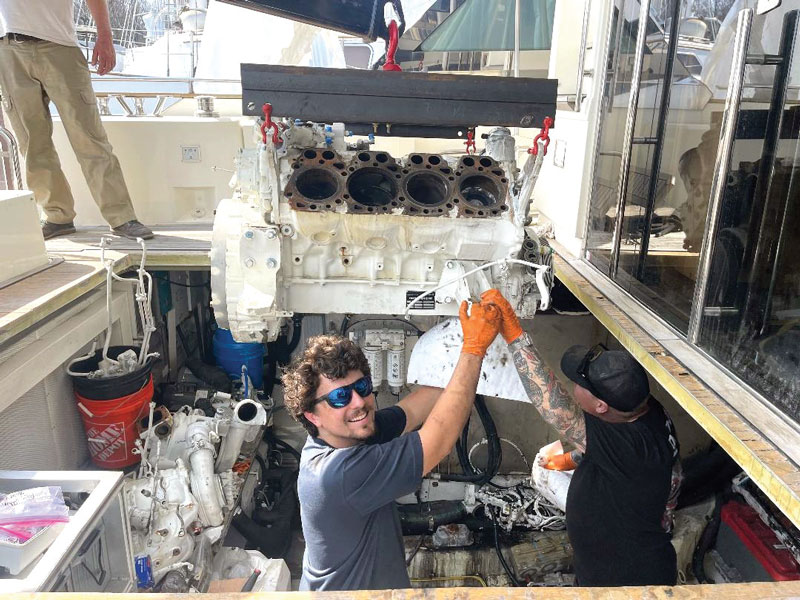
“From the Chesapeake to the Georgia coast, Apex Marine has been on the move this season with a string of Nanni engine installations up and down the East Coast. Closer to home at Herrington Harbour North, the team completed a new N4.115 installation into a classic Grand Banks—a precision job that required custom fabrication and careful rigging through the starboard salon window. The work didn’t stop there. Apex traveled south to Georgia to install two T4 230s and two 24kw Kohler generators into an 83-foot Prout, and north to Annapolis for an N4 80 with a V-drive installation aboard a 50-foot Valiant. Three Nanni installs across three locations is a testament to the trust our clients place in the Apex team.”
The following is an excerpt from a news release by the media center at The Chesapeake Bay Maritime Museum (CBMM) in St Micheals MD:
“During National Apprentice Week, the Chesapeake Bay Maritime Museum is pleased to share that thanks to the generous support of two major benefactors, its apprentice program has received significant new funding and has been renamed the Maynard W. Lowery Apprentice Program. This transformative gift honors the legacy of legendary local boatbuilder Maynard Lowery, who helped train CBMM’s first shipwright apprentices in the 1970s.
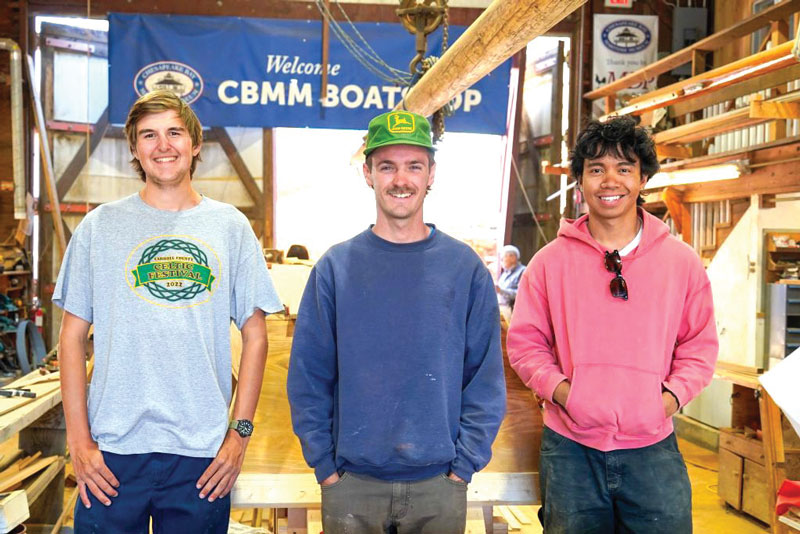
“CBMM’s long-standing apprenticeship program is unique in its scope and ambition as the nation’s only state-certified apprentice program in the trade of traditional wooden boat building and maintenance. The program was recently expanded with the addition of a Boat Captain Apprentice track to teach traditional and modern seamanship skills.
“Lowery built wooden boats out of his shop on Tilghman Island for more than 50 years before his death in 2008. His celebrated career included a stint in CBMM’s working Shipyard, leading the original restoration of the 1889 nine-log bugeye Edna E. Lockwood. During this time, he introduced an apprenticeship program to pass down traditional Chesapeake boatbuilding skills and techniques.
“A third-generation shipwright, Lowery was a prolific boatbuilder, particularly known for his catboats, who worked up to his death at age 88. He’s remembered as the last builder of traditional wooden Chesapeake yachts and workboats on Tilghman Island.
“Lowery already had a reputation as one of the region’s finest craftsmen when he was tapped to oversee an extensive restoration of Edna E. Lockwood, which had been donated to CBMM in 1973.
“Lowery’s team dismantled the nearly 90-year-old bugeye down to its nine logs and then built it back over a period of years with additional structural support designed to make it stronger than at its launch. The success of that effort is a major reason why Edna survives today as the world’s last historic sailing bugeye with designation as a National Historic Landmark.
“In 1976, a reporter from the Baltimore Sun visited CBMM’s Shipyard to spotlight the work that Lowery was doing to share the trade with a pair of apprentices.”
“It’s good to perpetuate the old crafts,” Lowery told the newspaper. “We shouldn’t lose sight of the fact that on the past we’ve progressed to this point. I feel we’d be doing a job for posterity by showing the younger generation a job well done.”
“We are proud to honor Maynard Lowery’s tremendous impact on Chesapeake boatbuilding and CBMM’s history,” said Kristen Greenaway, CBMM’s Ellen and Richard Bodorff president and CEO. “Maynard’s passion for teaching this craft continues to guide our Shipyard, and his legacy lives on through every apprentice who trains here.”
Tim Krause of Annapolis Gelcoat and Restoration in Annapolis, MD, sends us this brief update.
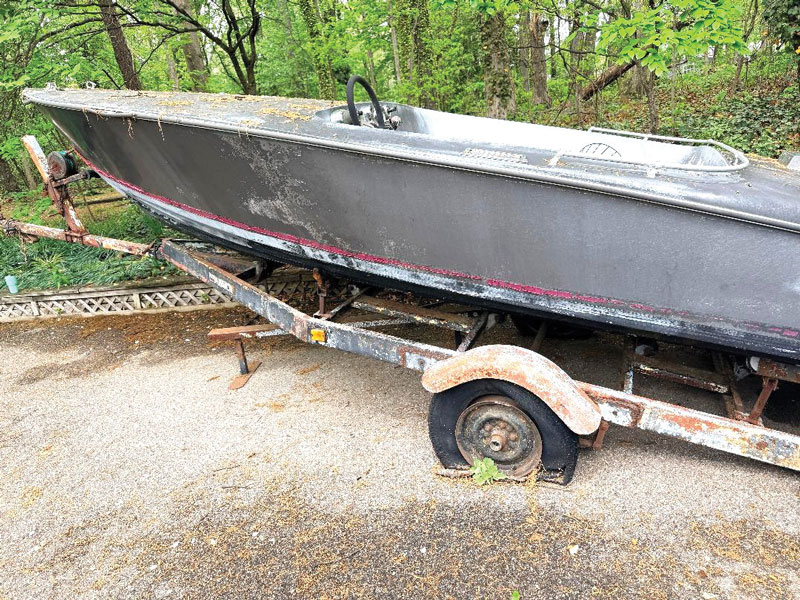
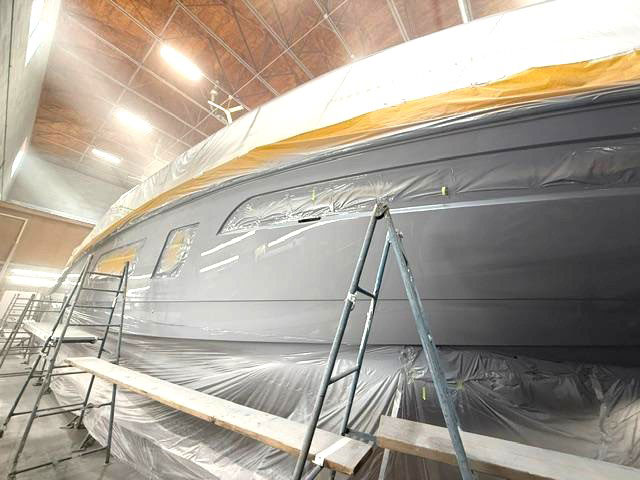
“We recently started work on a 1965 Formula Thunderbird. This classic boat is in total disrepair and will need a total refit.” Krause’s Osprey Marine Restorations in Tracys Landing, MD, also reported a complete hull repainting on a 65-foot Sea Ray L65 featuring Pettit Ikonikolor Custom Color Mix.
Rob Hardy of Composite Yacht in Trappe, MD, shares a major announcement with us:
“Big ideas don’t just happen. They’re refined, tested, and pushed forward through the design spiral. And that’s exactly where the new CY62 Offshore Convertible is right now.
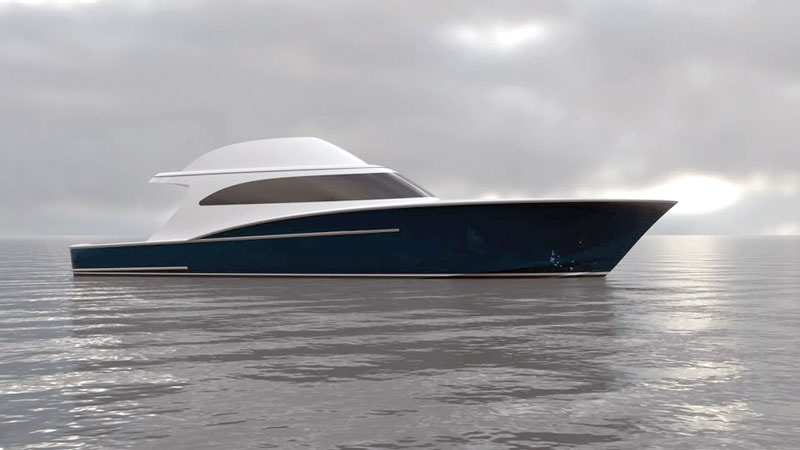
“This 62-foot sportfishing platform represents the next evolution for Composite Yacht; bringing our wood-free construction philosophy into the offshore Convertible world. Every inch is being engineered with advanced composite laminates, creating a structure that’s lighter and stronger, while ensuring long-term structural integrity and durability.
“Performance isn’t an afterthought. It’s the foundation. From hull design to weight distribution, this boat is being dialed in to run hard, efficiently, and confidently in real offshore conditions.
“And as always, it’s fully custom. The CY62 isn’t just a new model. It’s a statement of where we’re headed.”
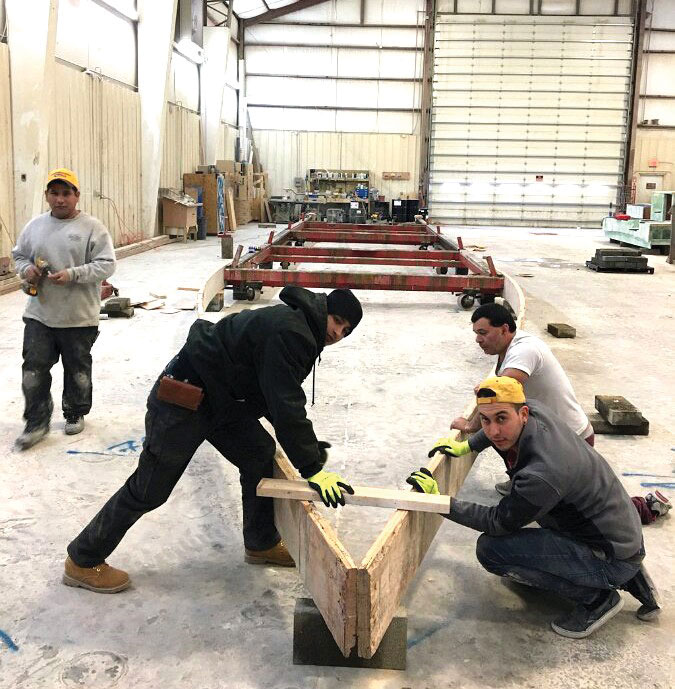
Weaver Boatworks in Deale, MD, has three boats under construction. The crew has just started work on a Weaver 75. A Weaver 80 is in about the middle of the construction cycle, and a Weaver 60 is a bit further along.
That’s it for this month. Enjoy the fireworks and be careful out there.
By Capt. Rick Franke