In June, I found myself back aboard Geneviève, our 1988 Island Packet 31, underway on the Chesapeake with my dad, Darryl, during Sail250. It was the first time the two of us had taken her out together since she was purchased in November, 2022. Looking around the Bay that day, I couldn’t help but think about how much this place had provided our family and how much had changed since Geneviève first brought us here.
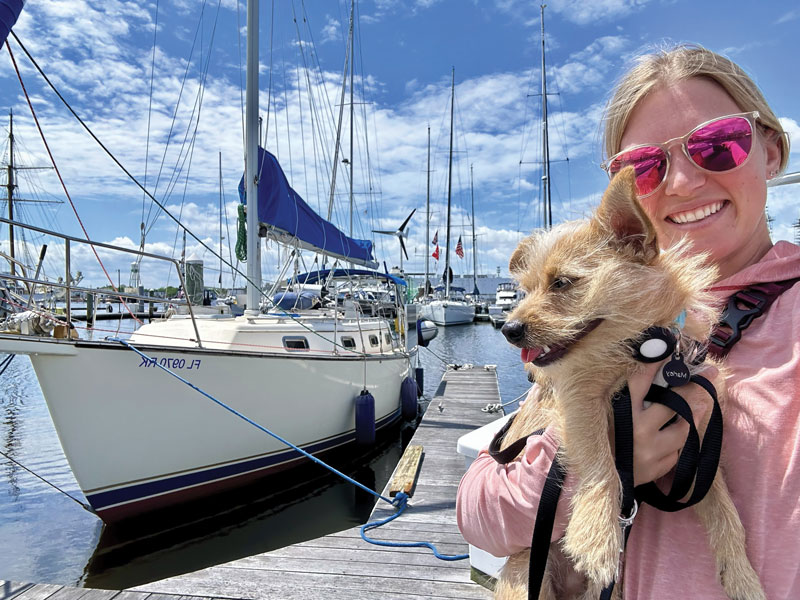
Our Chesapeake chapter began when my husband, Chad, and I brought Geneviève north from Florida to Portsmouth, VA. Like many owners of older boats, we arrived in the summer of 2023 with a list of projects. Virginia became the place where we finished outfitting her, learned her systems more intimately than we ever intended, and settled into life at Ocean Yacht Marina located at the mouth of the Bay. However, the Chesapeake soon became much more than a place to dock a boat.
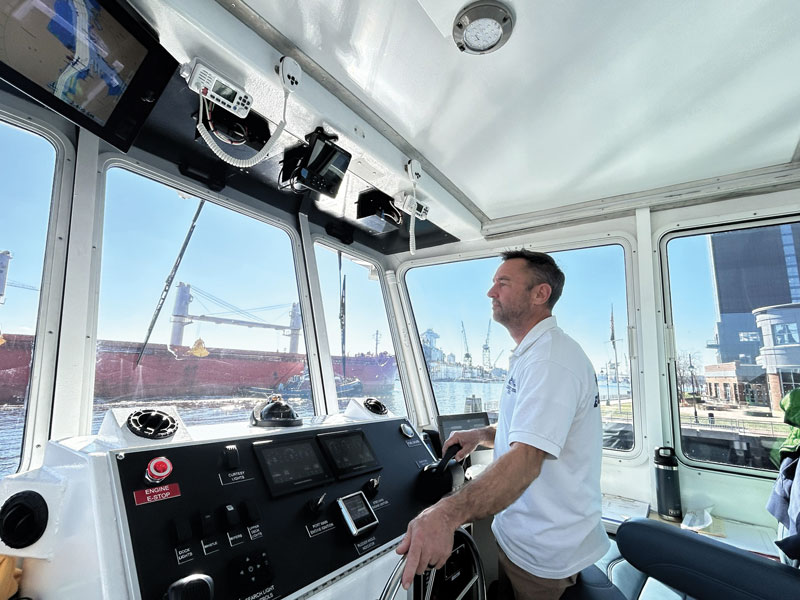
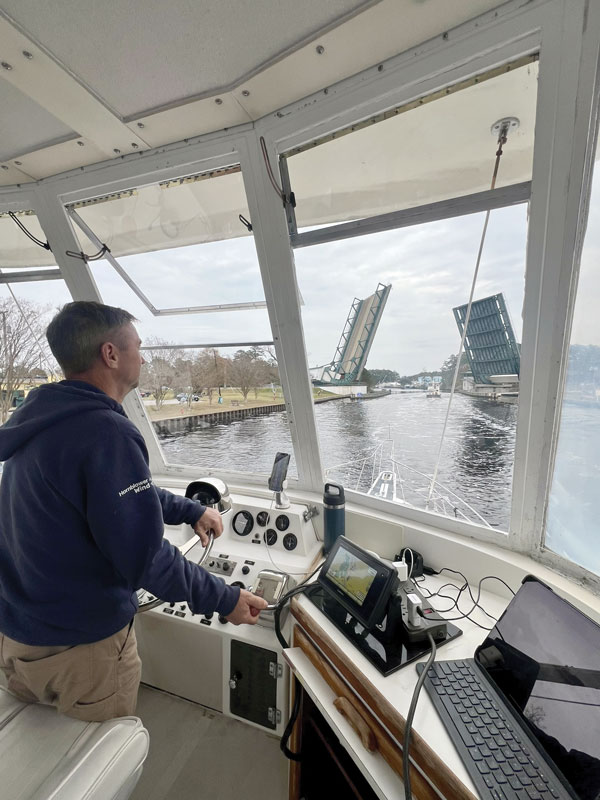
Chad worked his way through the ranks aboard the Elizabeth River Ferry, starting as a deckhand and, not long after, stepping into the wheelhouse as captain. During our time on the Bay, he also earned his 200-ton captain’s license through Chesapeake Marine Training Institute, furthering a career on the water that had become an important part of our Chesapeake chapter. Along the way, we found community among people whose lives, livelihoods, and weekends revolved around the water. The Bay became our backyard and, for a very special time, our home.
Trading One 1988 Boat for Another
Then came Agatha. By the summer of 2024, our time aboard Geneviève had taught us that we loved living on the water but also that our ambitions had outgrown our 31-foot sailboat. Rather than move up to a larger sailboat, we started looking at motor yachts. We loved sailing, but we were beginning to see the appeal of a motor yacht for the way we wanted to cruise. We wanted more living space, easier maneuverability, and the ability to get underway without the work of handling sails. Most of all, the added engine power gave us something increasingly valuable: the ability to cover more miles in less time. With work schedules limiting how long we could be away, a motor yacht offered the flexibility to make the most of the time we did have on the water and opened longer journeys that suddenly felt much more practical.
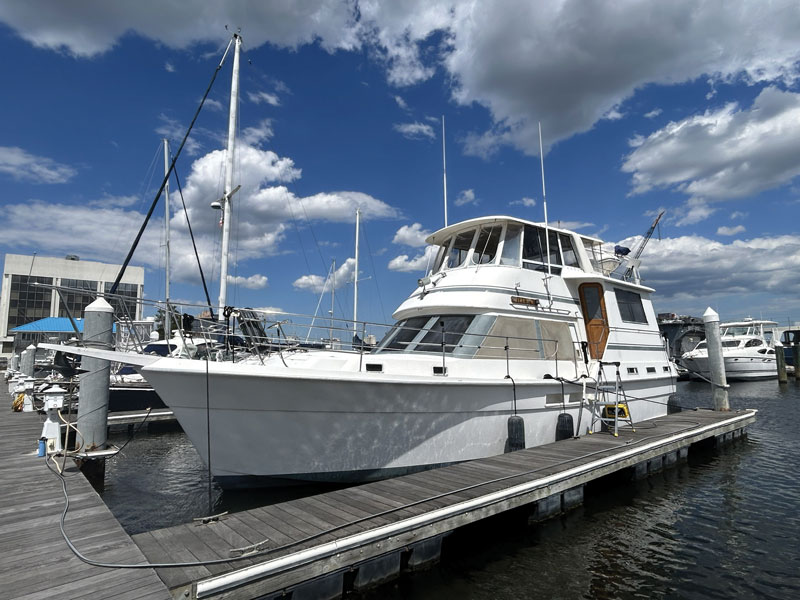
In July 2025, that search led us to Agatha, a 1988 Gulfstar 44 MKII in Isle of Palms, SC. Trading one 1988 boat for another meant we certainly weren’t escaping the realities of owning an older vessel. We brought Agatha north to Portsmouth, where the Chesapeake once again became our workshop as we learned a new boat and prepared her for the next chapter. Only this time, we were preparing to leave.
As much as we loved the Bay, there is something about life aboard that inevitably pulls you toward the next horizon. A boat can become a home while also being the very thing that carries you away from it—to extraordinary places you might never have reached otherwise. Thanksgiving 2025, Chad and I pointed Agatha south from Virginia and began a roughly 2000-nautical-mile journey—a Great Loop detour of sorts—that would eventually carry us to Chattanooga, TN. We made our way down the East Coast, alternating between the Intracoastal Waterway and offshore passages, crossed the Gulf, and finally turned north up the Tennessee-Tombigbee Waterway. It would have been easy to think of our departure as the end of our Chesapeake story. Instead, the farther we traveled, the more I came to appreciate just how much the Bay had given us.
What the Bay Taught Us
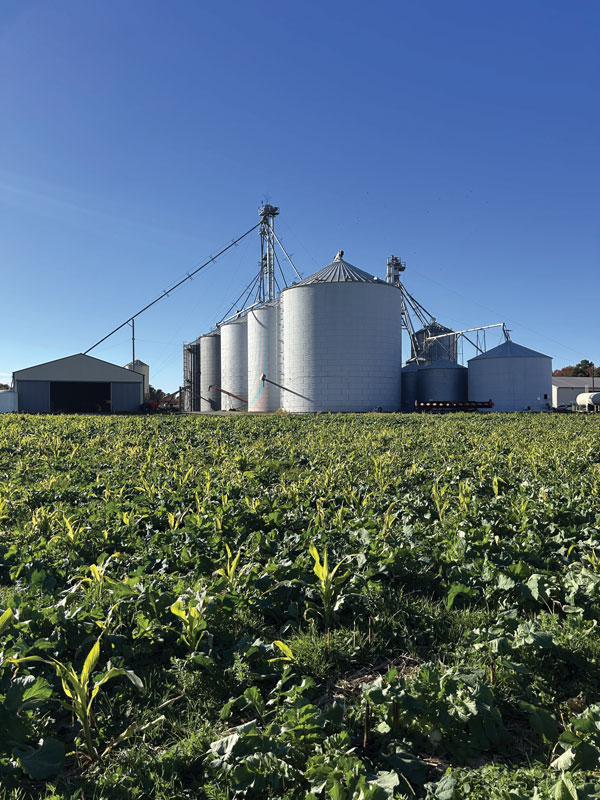
My professional life is rooted in agricultural conservation, and while we were living near the mouth of the Chesapeake, my work took me to the top of the Bay—to Rock Hall, MD, and Queen Anne’s County. Standing in farm fields there, I was struck by how closely two parts of my life that had always seemed separate were connected. The soil beneath my boots was part of the same watershed as the water beneath our boat.
What happens on the land upstream eventually matters to the creeks, rivers, wildlife, communities, and boaters downstream. It was something I understood professionally, but living aboard made that connection personal. The Chesapeake wasn’t simply a blue shape at the bottom of a watershed map. We traveled across it, watched wildlife on it, worked on it, and built our lives around it. My work had taught me to think about land and water as parts of the same system. Living on the Chesapeake taught me what it feels like to make your home within that system.
Boaters spend a lot of time thinking about what the Chesapeake provides. It gives us anchorages and sunsets, fishing grounds and sailing breezes. It supports livelihoods and communities. It gives us wildlife to watch, places to explore, and an extraordinary natural resource around which generations of traditions have developed. Our family received all those things and more.
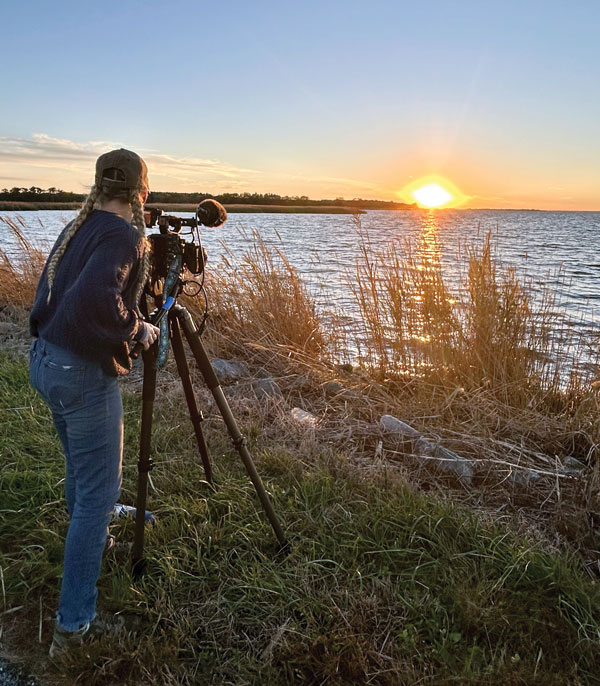
The Chesapeake gave us a place to finish outfitting Geneviève and prepare Agatha for her voyage, but it also gave us the adventures of getting them there and countless smaller ones once we arrived. We explored its rivers and shorelines, watched wildlife from the decks of our boats, and experienced the Bay in a way that only spending time on the water allows. It gave Chad a place to further his maritime career, and it gave us friendships, community, and a deeper connection to the natural world around us. Most of all, it gave us the confidence and curiosity to keep going—to point the bow toward unfamiliar waters and dream a little bigger about where these boats might take us next. Eventually, I began thinking about the other side of that relationship.
What do we give the Bay in return? For me, the answer begins with recognizing that enjoying a natural resource and caring for it aren’t separate pursuits. We can care about the water beneath our boats and the land draining into it. We can respect wildlife and habitat. We can support the communities that depend upon the Bay. We can introduce others to it responsibly and appreciate that our individual choices, whether we’re on the land or the water, are part of something much larger. Perhaps most importantly, we can simply remain connected to it. Natural resources are easier to care about when we know them, use them, and understand what they provide.
Watersheds Connect Us
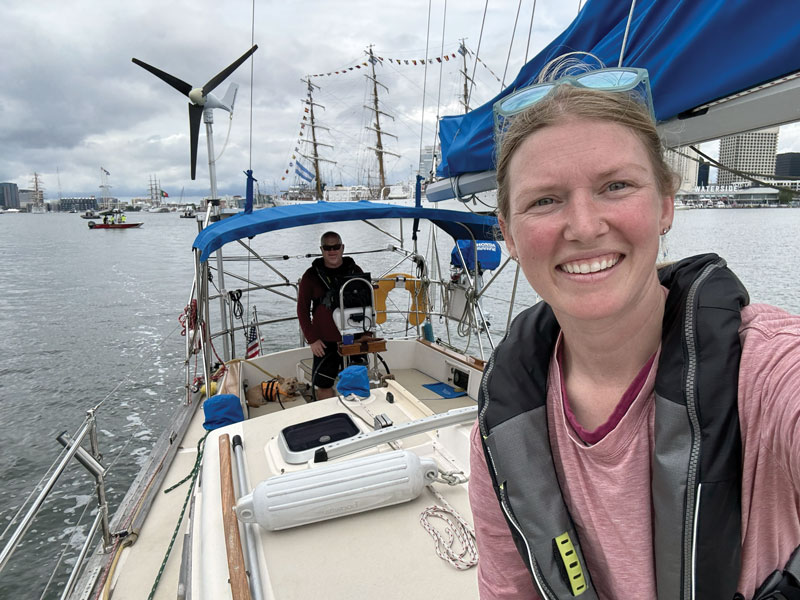
When Chad and I left Virginia aboard Agatha, Geneviève stayed behind. Today, my dad lives aboard her on the Chesapeake. That made returning for Sail250 especially meaningful. Dad and I finally took Geneviève out together for the first time, joining the flotilla during a once-in-a-lifetime celebration of America’s maritime heritage. Surrounded by vessels gathered from near and far, I couldn’t help but appreciate the improbability of the moment: there I was, underway on the Chesapeake with my dad aboard the little boat that had first brought Chad and me to the Bay and that had since become my dad’s home. After an upcoming haulout to paint her bottom and install sonar, my dad plans to set off aboard Geneviève and explore the Bay for himself. The same boat that brought Chad and me to the Chesapeake will now carry another member of our family through its tributaries, anchorages, and communities.
Our time on the Chesapeake Bay taught me something I’ve carried with me as Agatha has taken us through America’s waterways: watersheds connect far more than places on a map. They connect land and water, livelihoods and recreation, and people upstream and downstream. From Geneviève’s arrival in Portsmouth to Agatha’s departure nearly 2000 nautical miles later, the Chesapeake shaped how we live, work, and travel on the water. Perhaps the best way to honor that gift is simply to care for the waters that have given us so much. Someday, we hope to return to Portsmouth aboard Agatha and cross our wake, completing the Great Loop. We’re in no rush, though. For now, it’s a milestone waiting somewhere ahead while we enjoy everything in between.
By Olivia Caillouet