Once you have explored all that the Netherlands province of Friesland has to offer (in terms of a distinctive maritime culture set in a picturesque natural setting), a goal that would take several seasons to achieve (see our Chartering in Friesland article), the intrepid cruising couple should consider expanding their experiences to include the provinces of Groningen, Drenthe, and Overijssel. Here the boating is more challenging, due to the number of locks and self-operating bridges, while the rewards are equally remarkable.
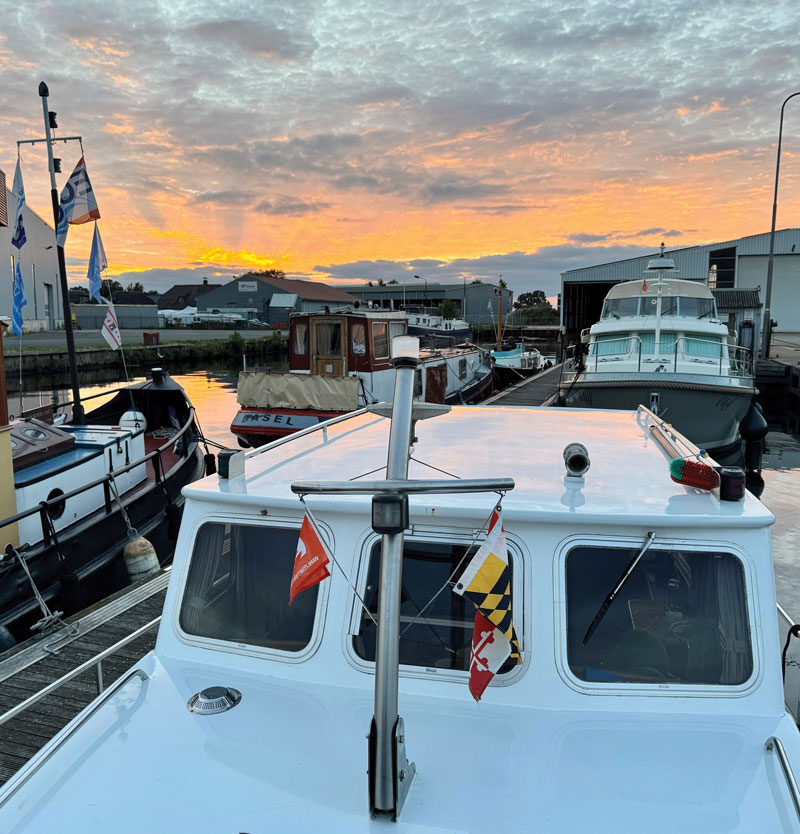
These three provinces make up the eastern half of the northern Netherlands and share a long border with Germany. Groningen (also the name of the province’s capital city) has a larger population with about 20 percent of its area comprising waterways. Drenthe is smaller and has fewer waterways, although they provide an important maritime connection to the rest of the country. Much of Overijssel and Drenthe is dominated by a system of lakes and canals formed through former peat-mining.
Many boaters leaving Friesland first enter Groningen via the 15,000-acre Lauwersmeer National Park along the northern coastline, where much of the area is a nature preserve. The Reitdiep is the main canal from the old fishing village of Zoutkamp where Jachthaven Hunzegat provides good accommodations. When visiting any Dutch fishing village, one must try the “kibbeling met saus”—freshly fried white fish with a local tartar sauce.
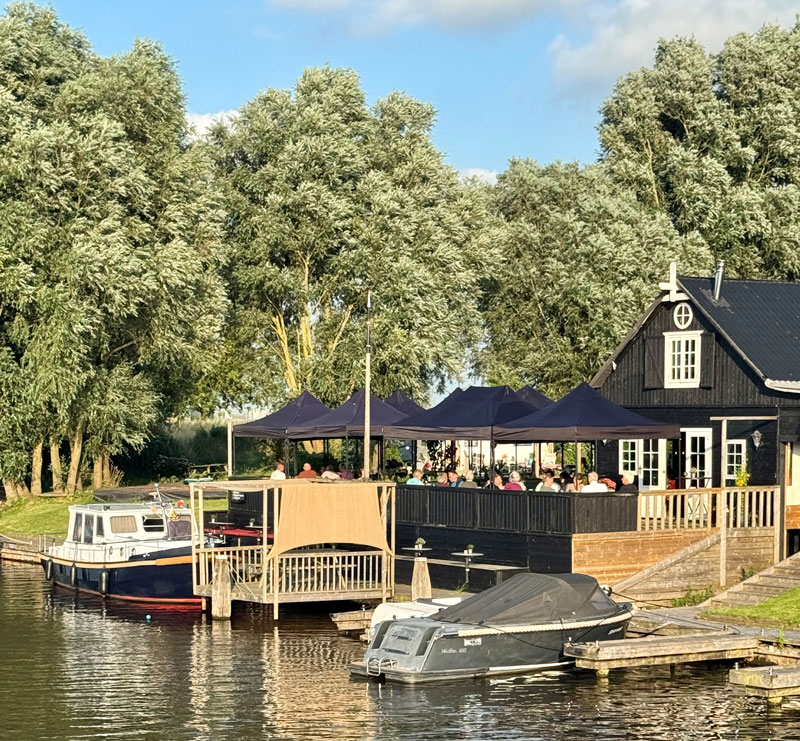
Both sides of the Reitdiep host some of the most evocative and historic landscapes in all of the Netherlands. From your boat you can see many churches, or “kirks,” perched on artificial mounds, or “terps,” that signal the location of an ancient settlement. Access to much of this area is limited to boats with less than 2.5 meter “air draft.” Our charter boat Finally (from Yacht Charter Sneek) was only nine meters long and three meters wide, with an air draft of 2.3 meters, perfect for exploring in smaller canals. Several villages, like Wehe-De Hoorn, have small electric boat or canoe rentals that also provide access to the region. Standup paddleboards are increasingly popular, too.
Just off the Reitdiep, through a seemingly very slow self-operating lock, is a canal that leads to several smaller villages such as Winsum, Onderdendam, and Warffum, each with comfortable docking accommodations. Turning south along the Reitdiep toward the city of Groningen one passes the canal-side marina at Garnwerd, where the harbor master lives aboard his own boat. The village also boasts two superior restaurants with great views.
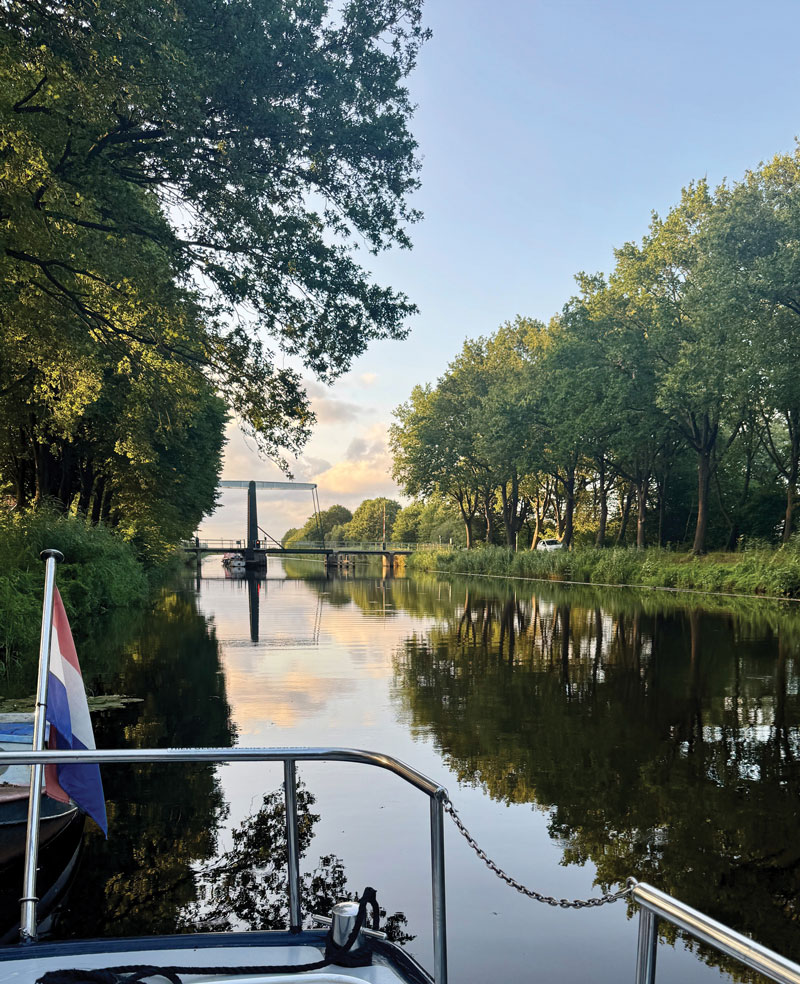
Groningen’s heritage as a Hanseatic city is visible in its canal network and warehouses dating from centuries ago. Today it is the capital of the province, and a vibrant university town, with a welcoming tourism center that provides breathtaking rooftop views of the city. There are several good vintage clothing stores and a very nice antique center to explore. Your host at Jachthaven Oosterhaven has an ample supply of local knowledge about the town and its waterways.
Head east of Groningen following one of three routes toward Appingedam, famous for its “hanging kitchens” which extend over the canal, and where the town’s harbor is inviting and easily accessible. Further east along the coastline is Delfzijl, which provides access to the Waddenzee and forms the border with Germany. The small village of Termunterzijl is a great place from which to explore the national park along the Dollard, a 38-square-mile estuary that is home to a wide variety of wildlife, including “zeehonden” or seals.
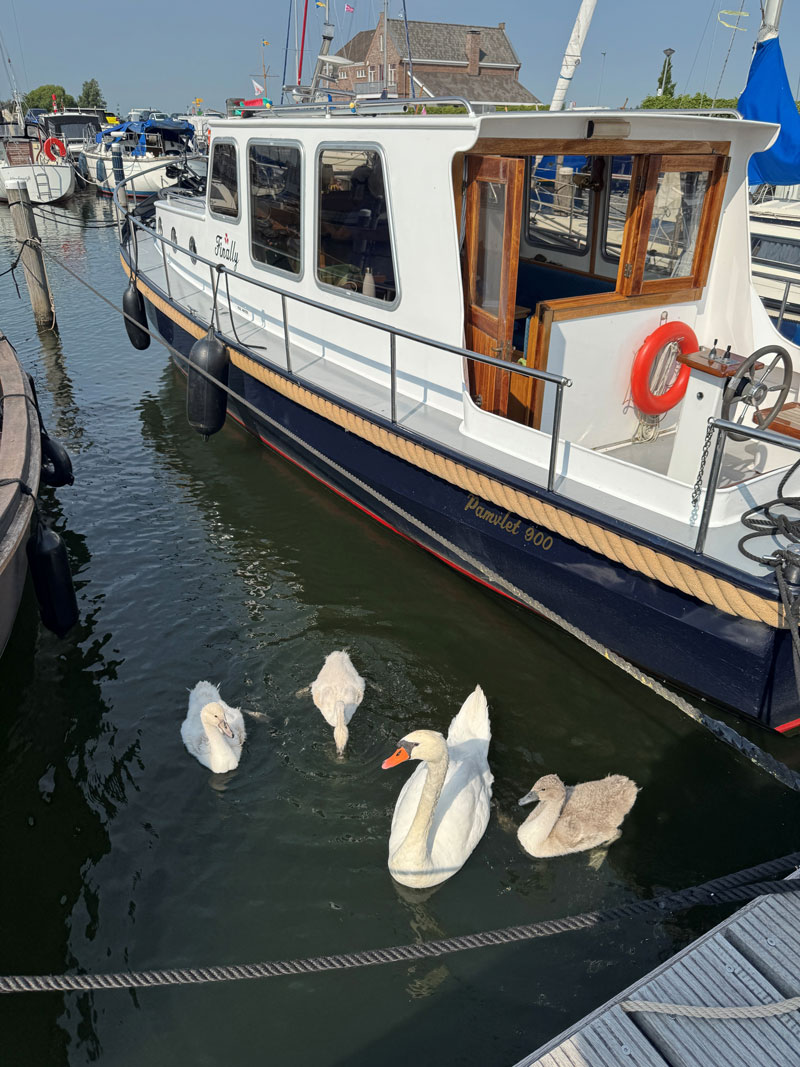
Continuing southward to the lake-filled environs of Winschoten, a haven for small craft sailing, the crew at “Yachthaven Winschoten” are well-versed in the local environment. As with cruising everywhere, it is always best to keep up to date with local conditions—this summer one of the bridges on the way south was closed for emergency repairs, thus necessitating changes to everyone’s plans.
There are two major routes south to the village of Ter Appel, one of which skirts the German border—it was strange to dock the boat, walk 100 feet east, and enter another country. Of course, travel between the two EU countries is a non-event—only the language on the signs changes; but our charter boat was limited to Dutch waterways. The village of Oudeschans, with its remnants of star-shaped fortifications, is worth a visit—easily accessible on our boat-bike. Cycling is a must for all active boaters—it vastly expands the experience and provides a new perspective on the places visited along the canals. Further evidence of historic conflicts between the two countries can be seen at the extensively restored fortifications at Bourtange, where a large “yachthaven” and camping ground is available for visitors.
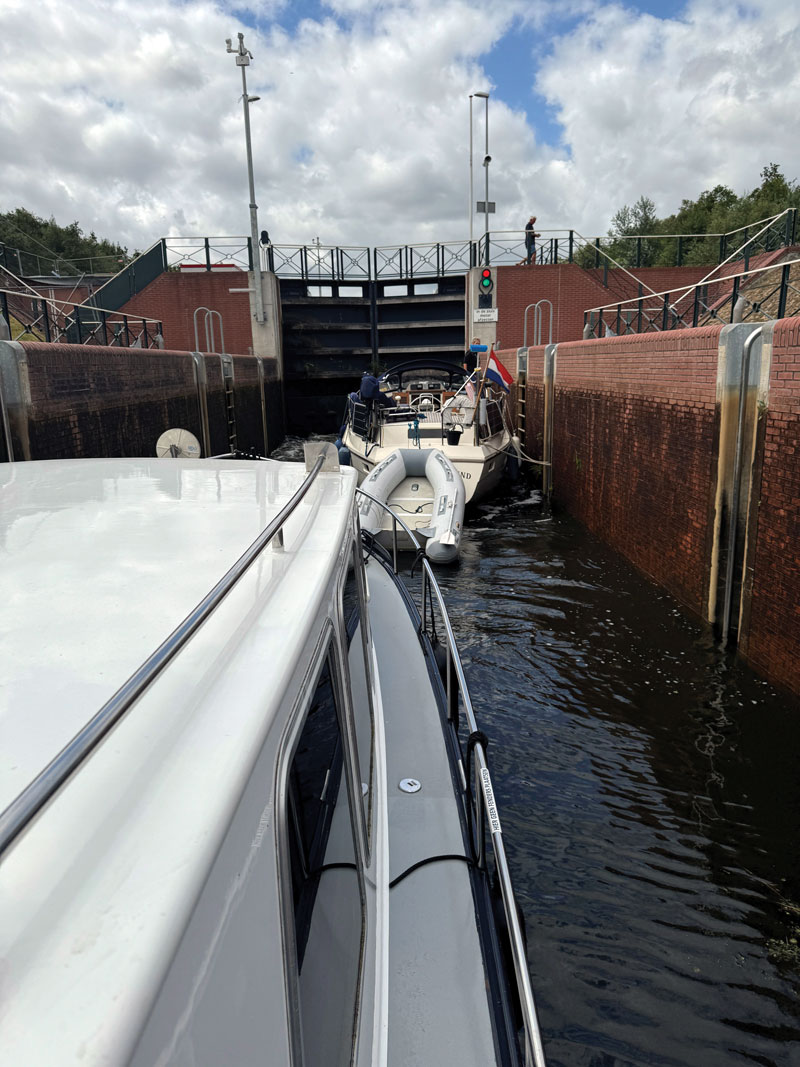
Along this route, it is necessary to travel in a convoy of boats, which sounds complex, but in practice is often a wonderful experience. At the lock just before the turn to Bourtange, we met another couple of well-experienced sailors from the town of Sneek who had removed the mast of their well-kept Southerly Star in the Wind and were spending the summer exploring the Dutch canals. Together we followed our lock keeper as he operated a series of locks taking us southward toward Ter Appel.
In the Netherlands, the time spent waiting for the water to rise or fall in a lock is a social experience. Old friends meet again, new friendships are formed, and everyone is seeking the latest maritime gossip. Especially in towns and villages, folks gather to watch the boats come and go through the local locks—they are important community landmarks.
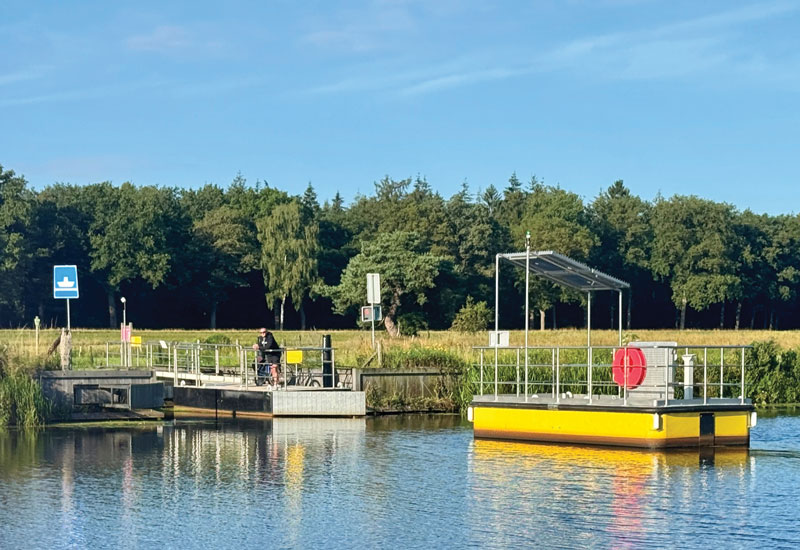
South of Ter Appel, a quiet village bisected by a long stretch of canal, one enters the province of Drenthe. The canal meanders past the outskirts of larger communities including Emmen and Hoogeveen before arriving at the busy city of Meppel. From there it is a quick trip to Zwartsluis, in the province of Overijssel, and beyond to the watery patchwork of the National Park Weerribben-Wieden, comprising about 40 square miles of lakes, waterways, and nature. Here, three villages standout for the boater: Giethorn, with its maze of smaller canals; Blokzijl, where the moorings are seated within the center of a star-shaped fortification; and Vollenhove, which boasts the best fish shop in the region and a spectacular “Corso” or flower parade at the end of August. For variety you can leave your boat docked and take your bike to a small electric ferry from which you can explore all that nature has to offer in this area.
This clockwise tour of the provinces of Groningen, Drenthe, and northern Overijssel along the German border is perfect for an experienced canal couple. The Dutch people, especially those along the waterways, are welcoming and the majority happily converse in English. Google translate takes care of signs and menus. After cruising a total of 17 weeks over eight years, this year was the first time that we had met another couple from the USA on the water. The abundance of nature and culture throughout the area provides a perfect setting for a wonderful holiday abroad, and there is always somewhere new to explore.
By Esther and John Sprinkle