Many boat owners are not aware of the necessity of regular inspection and replacement of their marine hoses. From drain hoses to fuel lines, sanitation lines and exhaust hoses, these simple but all too important lines can be the difference between a catastrophic failure and huge costs.
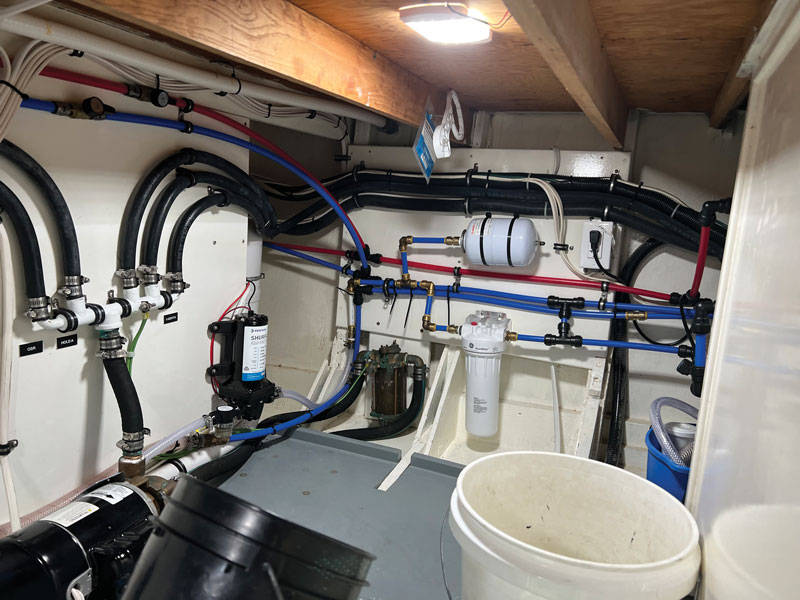
Here are some basic things you should know: most rubber hoses have a life span on average of about 10 years; fuel, oil, and heat break down rubber hoses prematurely; improper installation and the type of hose are also contributing factors in regard to damage.
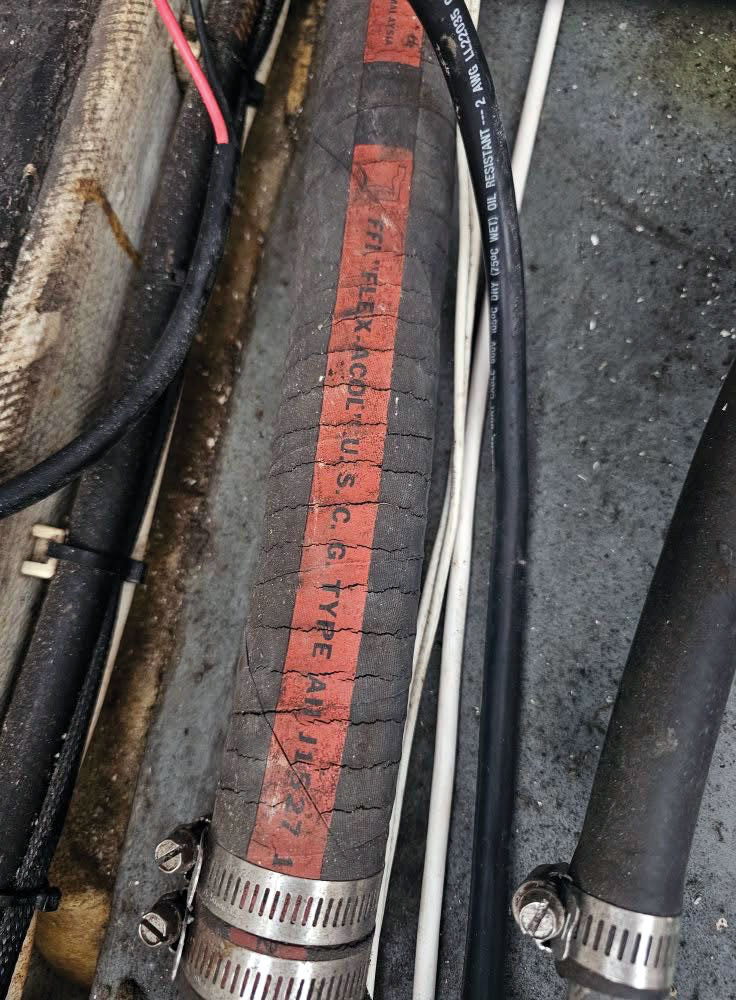
Let’s start with what to look for. When performing a visual inspection, look for:
- Small cracking in the outer hose jacket.
- Collapsed or pinched hose.
- Rusting through the hose jacket (wire reinforced hoses).
- Poor hose support and hard bends.
- Rusted hose clamps and/or improper hose clamp installation.
- Improper hose type for application.
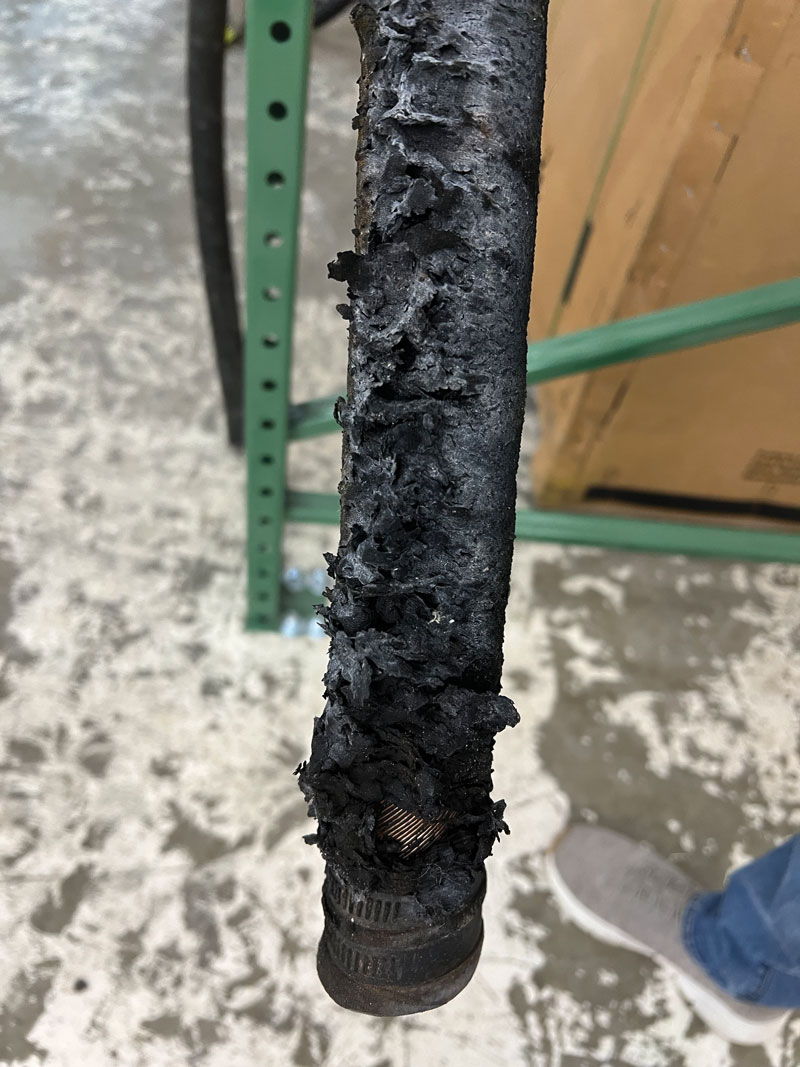
As we go through the vessel’s hoses, it’s not a bad idea to identify and tag hoses where appropriate; this will save time at yearly inspections.
If any of the above are noted during your inspection, it’s best to replace/service them before the next time you run your vessel.
It is very important to use the correct type of marine hose in its desired application as noted below:
- Rated marine fuel hose for fuel systems (typically will have red stripe and be listed as fuel line only) as per USCG standards, also ABYC standards (not adhering to this standard can cause the vessel to fail surveys and vessel will not be insurable until this is corrected).
- Sanitation hoses. There are multiple choices and grades to pick from; my preference is a mid-grade to higher grade for low odor and longer performance.
- Wet exhaust hose for most other applications above and below the waterline.
- Bilge hoses using the better quality vinyl hose. Avoid the cheap plastic corrugated type, as well as avoiding rubber hose, because oils, fuel, and cleaners can degrade the rubber.
- Silicone type hoses can be used in most applications and give longer service life, but be aware they are expensive and generally come in shorter sections.
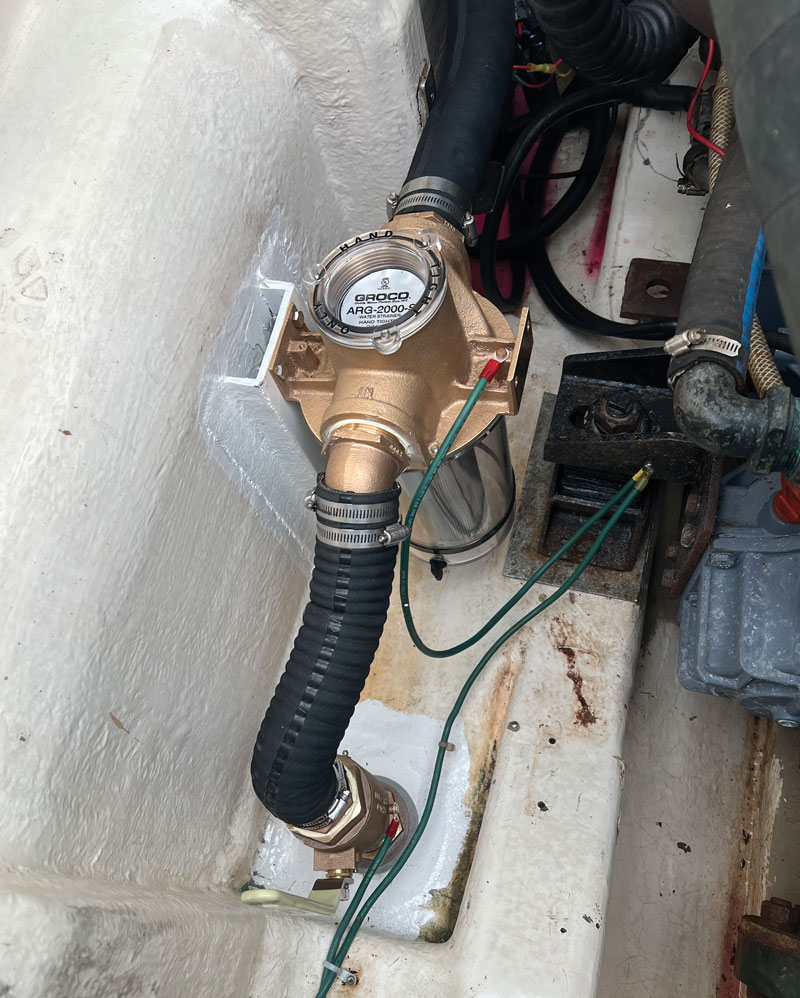
As we talk about hoses, it is also important to use the proper hose clamps based on the application. Generally, below the waterline a double hose clamp is standard practice, also for sanitation systems. Be sure to use good quality stainless steel marine hose clamps and stay away from automotive or hardware store brands; most do not have all stainless components. But just because they are stainless, does not mean they will not rust; otherwise, we would call it stain free. Any time you find rusted or over-torqued hose clamps they should be replaced. I generally like to replace hose clamps when doing hose replacements as standard practice.
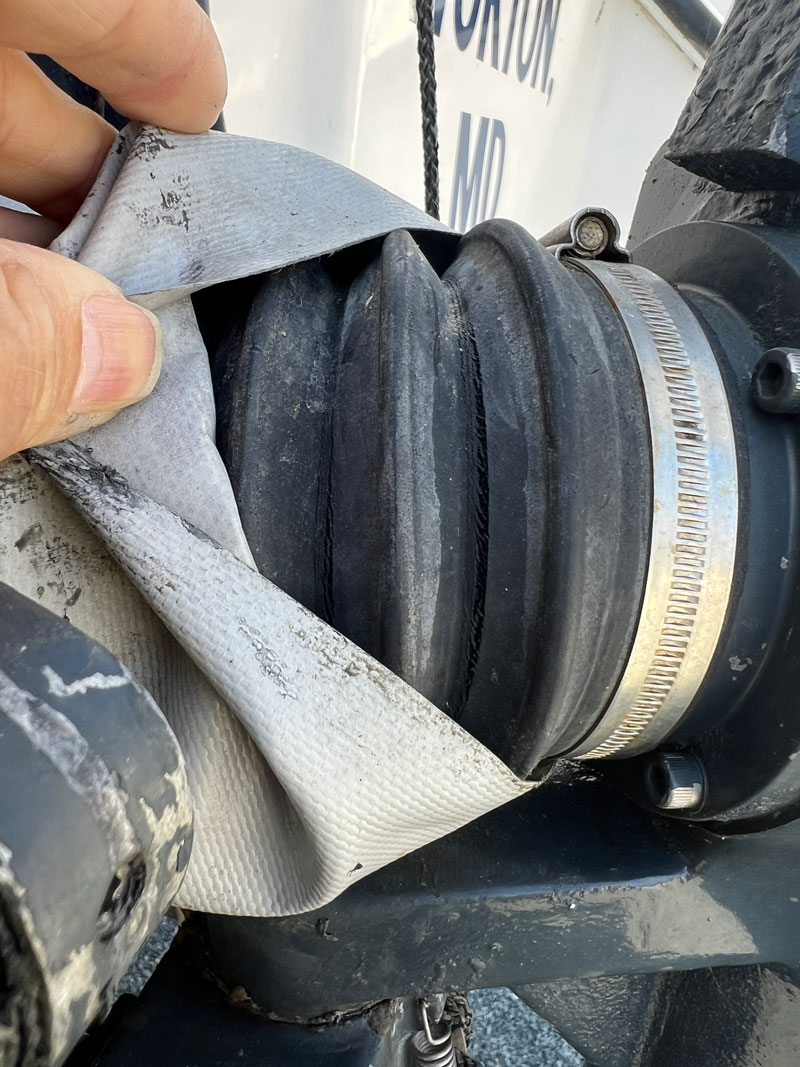
You also might encounter shaft seal hoses, typically found on inboard engines. These are not always the easiest to replace as they involve labor-intensive work and are often best left to a professional.
Most shaft seal types use rubber hose and should be replaced every 10 years. There are some that use silicon hose, and that should at least double the service life. Again, an annual inspection is recommended.
With careful attention to your vessel’s hoses, you will have confidence in its operation and enjoyment.
Over the years I have seen vessels sink, become damaged, and owners facing costly repairs, all preventable. Owners should become familiar with these systems and know what to look for as your life and investment depend on it.
Winter layup is a great time to head off some of this deferred maintenance, some of which owners can perform themselves. If you’re not comfortable doing it yourself, always contact your service provider.
About the Author: Erik Lostrom is a naval architect, third generation professional boat builder, and a graduate of The Landing School. He has worked in the marine industry for over 40 years and currently serves as the marine technology coordinator at Chesapeake College.