For Zeb Barlow, classic wooden workboats, specifically those built in Dorchester County, MD, are more than just a hobby; they are a passion. His family, the Todds, settled in Dorchester County during the 1600s, and he comes from a long line of working watermen. While Zeb went into the education sector, he never lost that passion for the water.
His grandfather, Charles Todd Sr., had a 40-foot workboat that he got after returning from World War II, and he owned that boat for more than 50 years. Zeb used to crab with him in the summers when he was kid, and he later got the boat from his father, Ernest Barlow, when he was 18. His very first boat, acquired when he was 16, was a 29-foot wooden boat built in 1944 by Roland Marshall in Talbot County.
Being around his father and his uncle, Charles Todd Jr., who always has been and still is a full-time waterman, is really where his interest in boats came from. “I remember being a teenager and seeing various workboats with my grandfather, out in the river or at marinas, and he would know exactly who built the boat,” says Zeb. “He could name the local builder and describe to me how he knew it was built by them. He really passed a lot of that on to me in terms of being able to just look at a boat and say, “Oh yeah, that’s an O’Neill Jones boat’ or ‘that’s a Milford Elliott boat.’”
In 1998, Zeb acquired the Gloria T., built in 1944 by Irving Cannon. He had that boat for about 12 years before selling it “up the Bay.” He felt that his work schedule was too demanding to be able to devote the time he wanted to the boat. After that he got a larger 45-foot wooden workboat built by Wayne Bailey in Delmar, DE, and he owned her for about six years. That’s when an opportunity presented itself for Zeb to own his dream boat.
A Dream Fulfilled
“I’ve always wanted a Milford Elliott boat,” says Zeb. “Ever since I was a teenager, he’s been my favorite builder hands-down. I’ve just always appreciated the design of his boats and the way they sailed.”
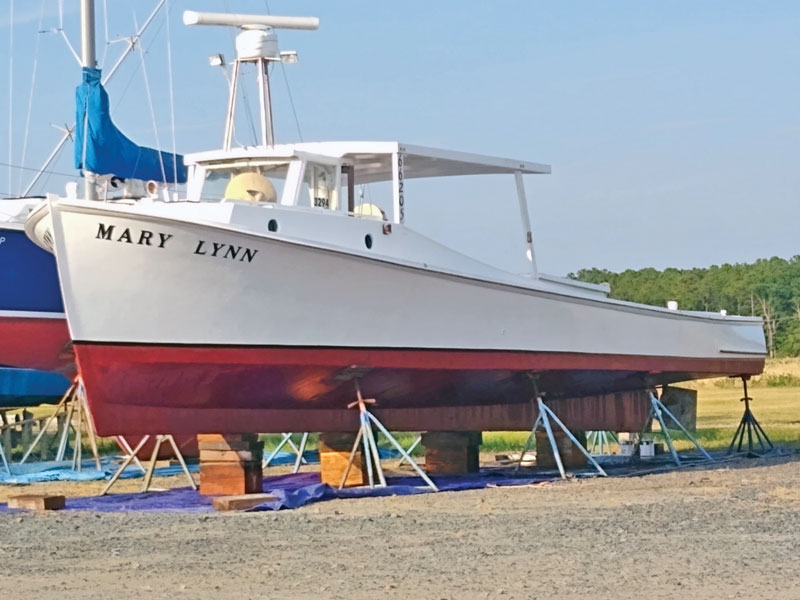
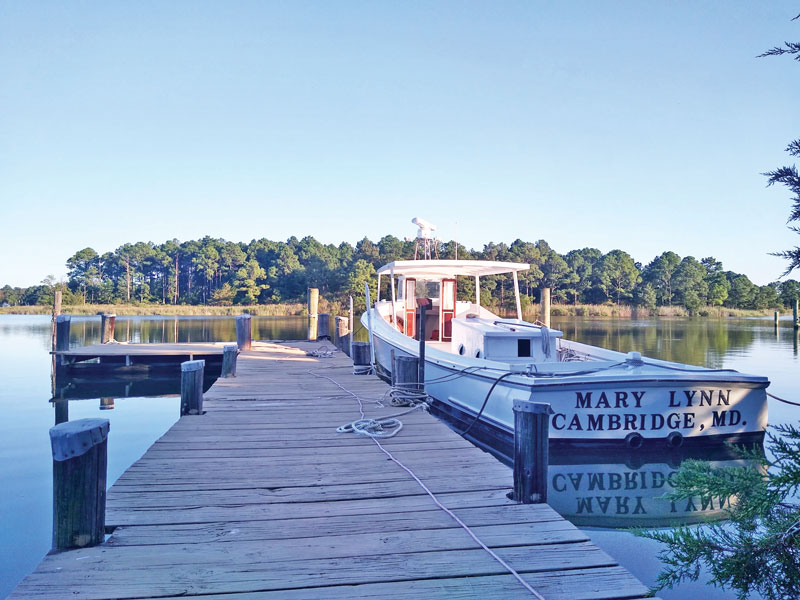
The former owner was Captain Donald Todd, who also happened to be a cousin of Zeb’s grandfather. Donald’s son, Captain Scott, knew Zeb loved the boat and told him that he would let him know if it was ever for sale. She’s named the Mary Lynn and was built specifically for Donald, who also happened to be the builder’s son-in-law. When Donald passed away, Scott called up Zeb.
He says, “Ever since I was a kid, I wanted a Milford Elliott boat; it took until I was in my early 40s to get one, but I’m thrilled to have the boat; I’ve always loved it. And it’s the boat that I intend on having for the remainder of my years.”
For Zeb, it truly was a full circle moment. His grandfather’s boat was built by Irving Cannon, and Milford Elliott took some of the design features from those boats. So, the Mary Lynn feels very similar to the boat he loved growing up.
A Lost Art
As a teenager, Zeb had many conversations with some of the local boatbuilders. Looking back, he’s so thankful for those memories because so many of those builders have now sadly passed away.
“I can remember talking to Milford Elliott, O’Neill Jones, Cecil Robbins, Eugene Travers… I was able to have conversations with them and ask things like ‘how many boats did you build?’ I remember Milford Elliott saying he built 44 boats and O’Neill Jones saying he built 82. And this is when I was just a teenager. I’m so thankful because now you just hear their names up and down the Bay, and I think, ‘Wow, I actually spoke to them multiple times,’” says Zeb.
“These men were artists; it’s a different from of art but they were definitely artists,” he added. “I always wished I had that talent, not only to design the boats, but the level of carpentry to build the boats was pretty incredible. When you think about it, you usually have an architect that makes the design and the builder constructs it. But these men were both. And they were able to build by the rake of the eye because they weren’t building according to plans. Some initial boats were trial and error and they improved with each one they built. Now there are so few wooden boatbuilders left. It’s a lost art.”
Which makes Zeb all the more grateful for the time he was able to spend with them, discussing and admiring their work.
According to Zeb, the big wave of wooden boat building in Dorchester County was over by the early 1980s. There have been boats built in Dorchester since then, but it’s not nearly on the same scale as its heyday. You might see a boat built here and there, but things really changed once boatbuilders started shifting from wood to fiberglass. And while fiberglass certainly has its place, those boats just don’t hold the same character for Zeb as the wooden ones.
“The builders I mentioned, even though Milford built 44 and O’Neill Jones built 82, each boat was different,” says Zeb. “One boat might be 42 (feet) and the next might be 41 or 43, and in many cases the cabins were different. Even if they were all set up for commercial purposes, one might be set up for crabbing and another for oystering, whatever the buyer wanted. Each one was a one-off; they didn’t come out of a mold like a fiberglass boat.”
For Zeb, it’s that “one-of-one” quality that makes wooden boats worth all the effort of maintaining them, especially now that he owns his dream boat.
Worth the Effort
The Mary Lynn was built in 1973. Despite knowing a good bit of information about her history, he doesn’t have any photos of the boat while it was under construction. Unfortunately, that was pretty common back then, says Zeb. Builders just weren’t taking photos of their boats while they were being built. In fact, he noted that builders often didn’t even put their name down as the builder in the official paperwork; more often than not the owner was listed (he surmised possibly for tax reasons). So that can make researching these boats difficult.
Sometimes the only way to know who built the boat is by knowing the design styles of these builders and being able to differentiate their work. Especially when the paperwork isn’t always accurate.
While Zeb laments the decline of wooden boatbuilding, he knows how difficult it would be to accomplish today. Finding good lumber at a good price is simply too expensive for most people, let alone finding someone who will still build a wooden boat. Fiberglass boats are also simply easier to maintain. Even many wooden boat enthusiasts have begun to get their boats glassed over, both for ease of maintenance and also to ensure their survival. Zeb says he was one of the last holdouts, but even he just had some work done.
As of this writing, he was having his boat’s topsides fiberglassed, but his intention is to keep the hull all wooden.
“It just makes it a lot easier to maintain,” says Zeb. “With a wooden boat, unless you’re using it every day and getting salt water on the top sides, the seams draw open and the boat ends up needing a lot more attention. So, I bit the bullet and had that done. There are not many wooden boats left that haven’t been glassed over, at least partially.”
Zeb had John Ashton, who’s also involved in the boat docking circuit, do the work for him in his shop. Thankfully, they found that the Mary Lynn was in incredibly good shape, so they didn’t have to replace any of the wood. Which brings us back to why Zeb loves Milford Elliott boats so much.
Incredible Craftsmanship
“An older waterman once mentioned that Milford Elliott was so particular about the lumber that he made his boats with,” says Zeb. “He would make his general selection, air dry the lumber, and then later he would look the lumber over again and if it wasn’t up to his standards, it would go in the burn pile. So that really paid off.”
Another one of Milford’s boats that Zeb always loved was built in 1945, and it’s still in incredible shape, which is definitely a testament to the selection of his lumber.
But apart from the quality of the wood, what else makes a Milford Elliott boat stand out?
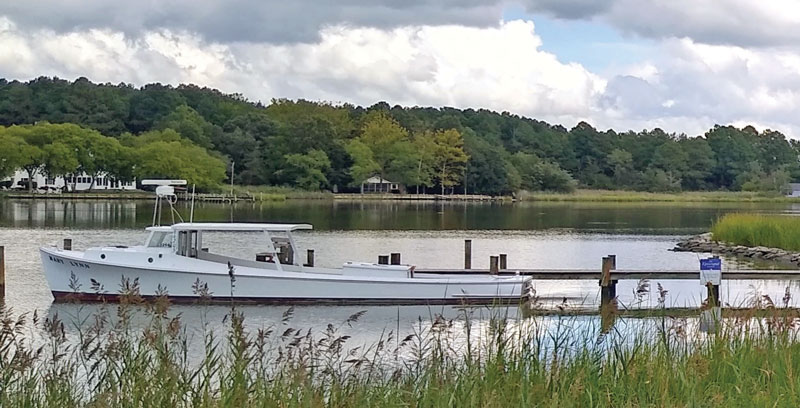
“The hull design,” says Zeb. “There’s not a straight line to be found on his boats. The sheer line of these boats was gradual and the particular way it would rise back up at the stern, the tumblehome, takes incredible craftsmanship.”
For Zeb, the curvature of these boats and the way they would sail in the water, “almost as if they had tracks underneath the boat,” are what really fueled his childhood passion, and it was a passion that continues to this day.
Milford had three sons and a son-in-law, and they all kept their boats not far from where Zeb grew up. As a boy, he can remember trotlining on Hudson Creek in the Neck District and watching those boats go out in the morning and admiring how beautiful they looked cruising across the water; “beautiful from every angle,” he remembers. He knew he wanted one from the time he was a teenager.
Now with the Mary Lynn, Zeb not only fulfilled that childhood dream, but he’s also preserving a bit of history. The boat was named for the original owner’s daughter, who also happened to be the builder’s granddaughter.
When asked about the name, Zeb says he would never change it. He loves the history, and he’s honored that the family sold it to him.
“The former owner was a hard worker, and he was always doing something to the boat to maintain it,” says Zeb. So now he’s reaping the benefits. There’s always going to be maintenance that comes with a wooden boat, but Zeb had a better starting point than most.
When it comes to annual maintenance, Zeb says he pulls it out every year and has it blocked so that he can sand the sides and bottom and then repaint it, replace zincs, etc.
“The challenge with a wooden boat is that in the spring you often pull it out and it’s rainy, and you need a good stretch of weather to sand and paint. But you don’t want to leave it out too long because the bottom boards tend to draw open, so it’s a matter of getting to everything you can, the best you can, and hopefully having it out no longer than a week before you put it back in the water,” he added.
And because of his work schedule, Zeb says he typically can’t get to the boat until five o’clock or so in the evening, so much of the sanding work he must do at night with lights and then work on the topcoat on the weekends. All of this work is so much more than just aesthetics; it’s about preventing rot, especially with the topsides. You really need to make sure all the seams are filled and painted because, “fresh water is the death of a wooden boat,” he says.
Wooden Boats Have Character
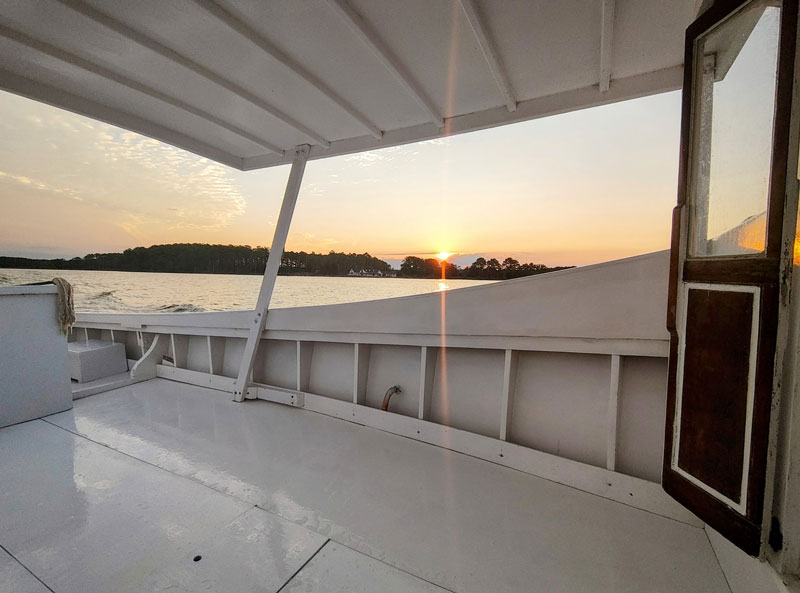
But all the work is worth it. Zeb loves traveling to ports up and down the Bay (one of his favorites is Chesapeake Beach), and he loves the looks and comments his boat always gets; questions such as who built the boat and when it was built.
“A lot of boats you see don’t have the character of a classic wooden boat,” he says. “I’m more than happy to talk to people about it and tell them about the builder.”
One of the reasons Zeb thinks Milford Elliott boats have really stood the test of time is because he was both a waterman and a boatbuilder. “He made his living on the water,” says Zeb. “So, he really knew what qualities made a good workboat.”
The last workboat he built was in 1978 and after that he still worked on the water. He only agreed to build one boat each winter and by the time it was done, it was time for him to go back to crabbing. Zeb learned from his son, Davis, that people would come down and offer him half the money for the boat then and there, but Milford would only commit to one boat at a time. He never had a waitlist.
It’s stories like this that really bring the history to life for people like Zeb. While chatting with me he joked how he might not remember what he had for breakfast, but he can remember a story about a boat from 30 years ago. We even chatted about my grandfather’s boat, and Zeb was one of the few people I’ve spoken to who knew the builder, Dewey Hart, right away.
He loves being able to share this knowledge with people, especially since so many of these stories have been lost to time. Zeb runs a Facebook group called Chesapeake All-Wood Work Boats, and people will often message him photos of a wooden boat that they either own or simply saw out and about on the Bay. He loves being able to share some of the backstory about the boatbuilder if he’s able. He’s happy to provide a forum for those types of discussions, because it truly is a lost art.
Thankfully, there are people like Zeb around to keep those stories alive. If you’d like to join the discussion, be sure to check out his Facebook group.