Raeyane Farrell and Bill Cabrall, Chesapeake sailors and Annapolitans, had dreams of completing the Great Loop and decided to find a Loop-capable powerboat to do so. Here Raeyane shares with PropTalk how the journey came about.
How did the dream begin?
In 2016 my husband Bill Cabrall and I were living in Colorado and had recently retired. For years we had been travelling extensively around the US to race our Lightning sailboat. That particular year, we went to Rochester, NY, for a Lightning National regatta, and on to Maine. During the trip we saw an advertisement for a short cruise on the Erie Canal that included going through a lock and at some point learned about the Great Loop, which has more than 100 locks. I have always loved cruising and became inspired to do this trip.
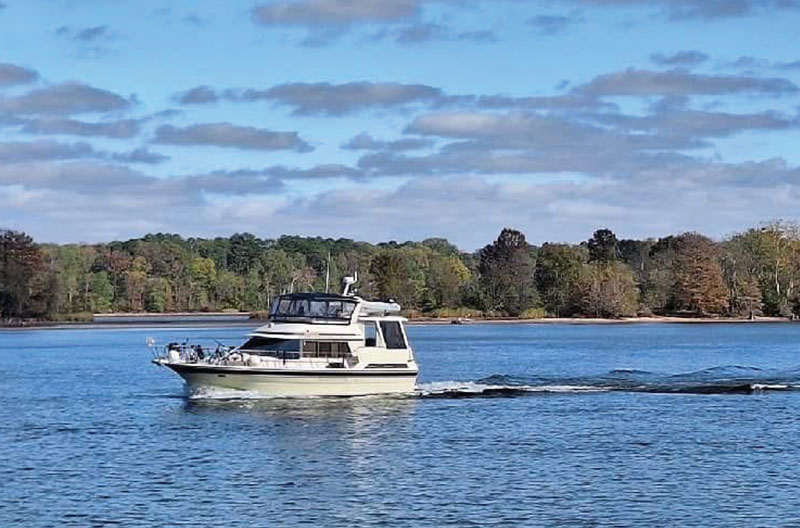
As time went on, the idea grew on us. We are nautical people. We like nautical things, and we thought it sounded interesting. After we moved to Annapolis in 2018, we started looking for a Loop-capable boat, and eventually we found and purchased Gratitude, a Vista 43. This was the biggest boat we had ever owned or operated, and we realized immediately that we would need to acquire some new skills despite our many years of boating.
We took diesel and electrical introductory courses through America’s Boating Compass so that we could troubleshoot together. Bill took advanced courses in diesel and electrical systems at Annapolis School of Seamanship. I took their navigation courses to refresh my rusty skills. We both took a first aid course for boaters. We mostly taught ourselves to handle the boat based on previous experiences, but we also hired a training captain for some refinement.
What was your boating background?
I grew up in the Pacific Northwest, but my family had no boating interests at all. I went to summer camp for two years in my mid-teens and learned how to sail and about powerboating. I loved it; however, boating was mostly sidelined for about a decade until I joined a sailing club and took sailing classes to charter boats up to 36 feet. I mostly sailed afternoons on the local bay and on other people’s boats on the weekends. I also cruised in the Caribbean and Greece. When I moved to Colorado, cruising was just not going to work, but I needed to be sailing. There I met my husband, who was a racing sailor, and I got into racing a Lightning with him.
Bill comes from a family with a long sailing and racing heritage. He says he began sailing at age three! His grandfather had a 50-foot wooden schooner that he raced in San Francisco Bay and sailed around the world. Bill has owned and raced small sailboats since he was 12 and is currently a measurer in the Lighting Class.
What was your timeline and strategy?
We originally thought we would complete the circumnavigation in one year’s time, but we were open to putting the boat away for a winter and taking more time. We had planned to cruise the Chesapeake for a year before starting the Loop, but instead we spent two years giving money to mechanics. We might have worked our spreadsheets and checklists forever, but finally in 2023, we looked at each other, asked ourselves if we were ready, loaded the boat, and left.
Regarding our house in Annapolis, on the surface it looked like a great financial idea to rent it, but there are costs to that. HOA restrictions would have required us to rent for a full year, and we would have incurred additional liability insurance expenses. What would we do with our personal stuff? Pay for a storage unit? In the end, it didn’t make sense for us. We hired a concierge service to check on the house regularly, and our neighbors kept an eye on it, too. We found it useful knowing that the house was available to us if we needed it—and we did. We came back for the first winter and two more times, once for a semiannual set of doctors’ appointments that most of us have at our age, and once when Bill came back to race in the Helly Hansen Sailing World Regatta, which was being held for the first time at our yacht club.
We started in June of 2023 and went as far as Spring Lake, MI. We loved Michigan and the North Channel and wanted to spend more time there, so we were happy when I found winter storage in the area, allowing us to return to Annapolis and break the adventure into two parts.
We headed back to the boat in July of 2024. After making our way to Killarney, Ontario, we paused so Bill could go to Crystal Beach (also in Ontario, but near Buffalo, NY) to race in the Lightning Masters Championship. After the regatta, we turned the boat around and headed down Lake Michigan, through the inland rivers, around Florida, and up the ICW to Annapolis to complete our Loop on June 9, 2025.
What was your division of labor for life aboard?
Raeyane: navigation, weather, planning, logistics, reservations/rescheduling... rescheduling again… more rescheduling, and finance. Taking the boat out from the dock.
Bill: engineering, maintenance, and repairs. Docking—from his years of Lightning sailing, Bill can do the changing physics and geometry in his head way faster than I can.
Joint: weather, driving, problem solving, trouble shooting, and line handling.
Did friends and family join you along the way?
Many people said they wanted to come. A few did. We loved having them! I’m told that it is common for people to express interest and equally common that fewer show up. We made it clear that we could tell them when we could meet them or where we could meet, but not both; that was part of the adventure. We also set clear expectations for life aboard. The guests that did come were wonderful. They included some of our sailing friends, two of my high school friends (who really bought into the adventure and took on many tasks despite not being boaters), and our son who was with us for 10 days, much of which seemed to be spent turning wrenches with his dad in our engine room, both of them grinning ear to ear.
Any unforeseen challenges? How did you overcome them?
For me, a big challenge was the ongoing logistics—having to plan safe navigation and gather local knowledge through an unknown area every single day. Another challenge was getting boat parts or a skilled mechanic in a timely manner. However, with teamwork, we overcame many obstacles and challenges.
Here is one example. In Michigan, we had Gratitude pulled to have some prop work done while we went to a wedding. When we got back, Lake Michigan proper was very rough, so we decided to go out in the inner lake for a test run. After about a half hour, the starboard engine quit. Bill quickly dove down into the engine room and got it started again. It stalled again. Several times it started and stalled. Meanwhile I was holding station. As it became apparent that the engine would not run and the wind was beginning to pick up, I started working us back to the marina. I drove while Bill handled the lines, since by that time I had more hands-on experience maneuvering the boat on one engine. We have two-way headsets, affectionately called “marriage savers,” and they were very helpful. On the first approach, the wind caught us when I turned to go into the slip, so I had to back out and try again. It wasn’t pretty, but on the second attempt we docked without hitting anything. The key was to work as a team and get hyper focused.
What would surprise most boaters about the Loop?
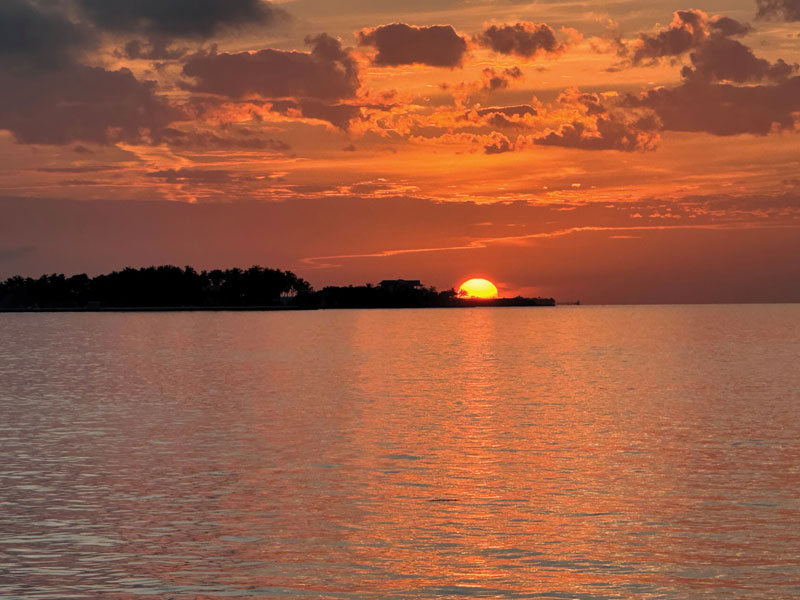
It’s MORE. More of everything. More beautiful sunsets, interesting places, wonderful people, and sense of community; and the feeling of accomplishment is so much more, too. It’s also more work, more challenging, more expensive, and more tiring.
We spent about 50 percent of our time traveling. The other 50 percent was spent on sightseeing and exploring, administrative tasks, cleaning, and boat maintenance and chores. There were also times when we didn’t get underway simply because we were waiting on a good weather window or because we were tired and needed a lay day.
Top destinations and why.
That’s a tough one! I think we can get it down to five!
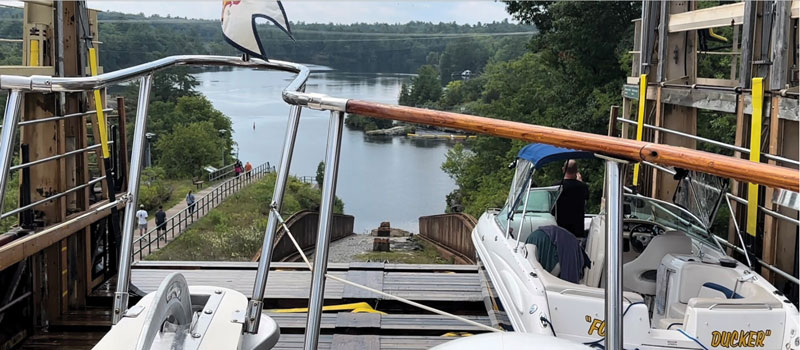
- Rideau Canal side trip in Canada. Beautiful, charming, and peaceful. The locks are manually operated, and the lock staff are super friendly, cheerful, helpful, and really nice.
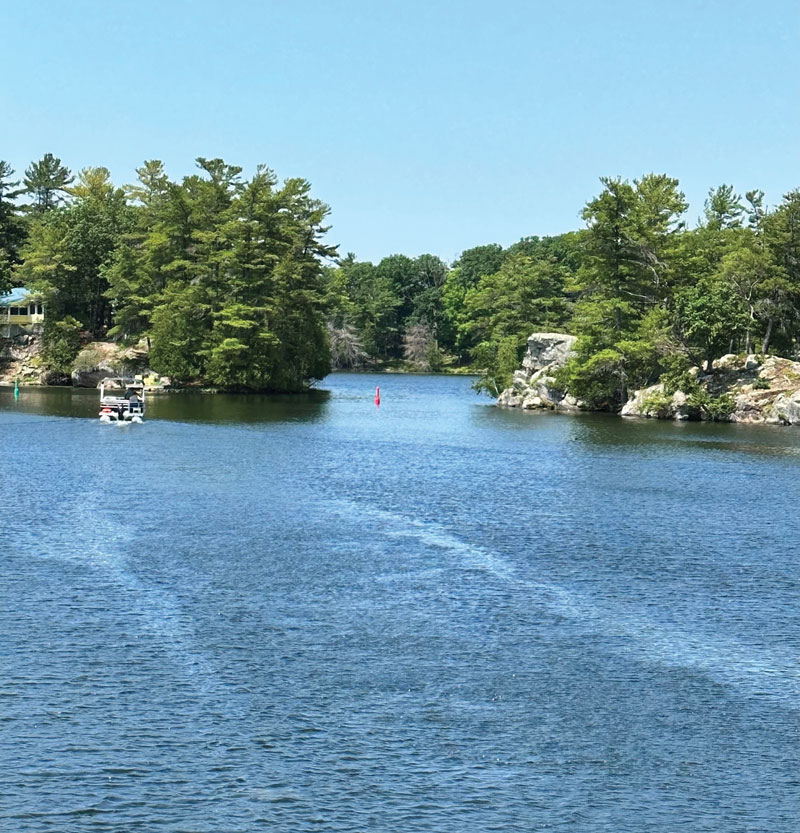
- North Channel of Lake Huron. Stunningly beautiful, remote and quiet, with charming small towns and very friendly people.
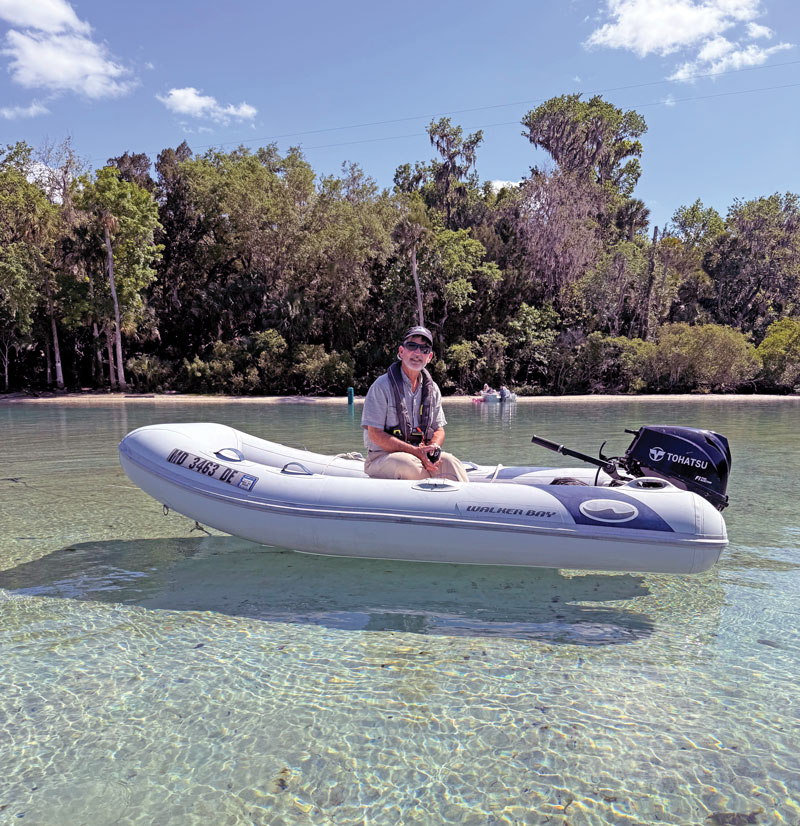
- Michigan. What a surprise!! Beautiful aqua blue water. Charming towns, wonderful people, and easy navigation.
- Florida Keys. Warm! Interesting things to see. We stopped in Marathon for a month. It was the only part of the Loop that felt like a vacation.
- The Chesapeake Bay. Yes, after 7000 miles, it is still one of our favorites. So pretty, so many places to go, so much variety. Spa Creek, where we kept the boat on our return, is one of the most beautiful places we saw on the whole trip!
Thoughts for someone considering the Loop:
- The Loop is a series of about 200 day trips.
- Plan, prepare, do it!
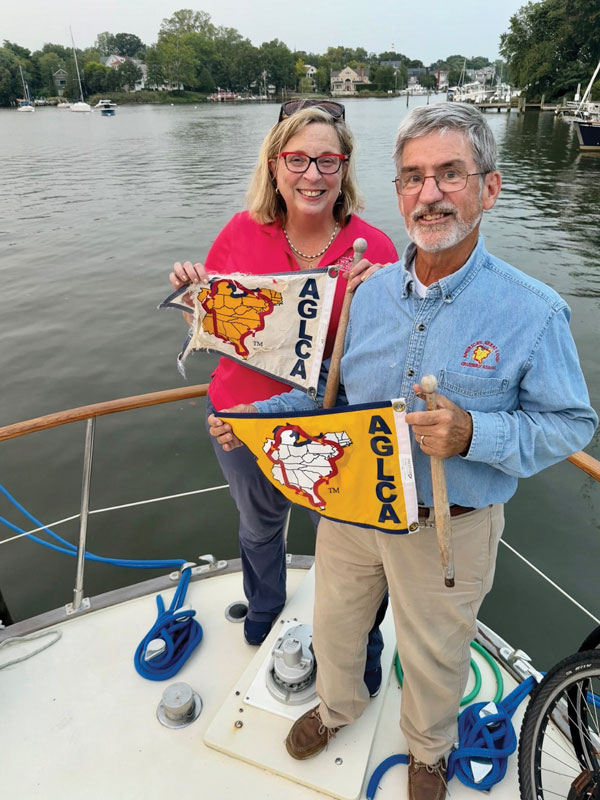
- Attend an America’s Great Loop Cruisers’ Association (AGLCA) Rendezvous to learn about the Looper lifestyle. The Looper community is astoundingly helpful and supportive.
- Two ways to help narrow your search for a Loop boat are to participate in an AGLCA boat crawl (touring others’ Loop boats) and chartering. When you find your boat, it’s worth the investment to hire your own surveyor before closing the deal.
- Both of you need to learn how to handle the boat. One person may drive most of the time, but both need to be able to do some basics in an emergency. Hire a training captain if you need to.
- Everyone’s Loop is different. Do what works for you, your boat, and your relationships.
- Buddy boating is very enjoyable. We tended to “Loop Frog” and see people again down the way.
- Many Loopers meet up again after completing their Loops. We are fortunate to live in Annapolis, and many of our favorite Looper friends came through last summer.
- Remember it’s a pleasure cruise. If the weather isn’t good, don’t go! Build your “go” and “no-go” criteria before you leave—and stick to it.
- Get your boat in the best possible shape before leaving, or the trip can become one long maintenance challenge. The Loop is the equivalent of 10 years of normal cruising compressed into one to two years. Things will happen, and must be dealt with, but anything that can minimize problems is worthwhile.
- New boaters should get some training and build some skills, including a good set of docking skills. The more you know your boat, the more fun you’re going to have.
- Most importantly: We were (and still are) a team. That was the only possible way for it to work for us. We are a great team!
Learn more about the Great Loop and America’s Great Loop Cruisers’ Association at greatloop.org. Find more Great Loop adventure stories at proptalk.com.
As Told to Beth Crabtree by Raeyane Farrell